Hero decks · 4 of 4
Wonder Man
Died in his first issue, came back as a movie star
In this article · 15 sections
The man
Hollywood and the Avengers
Allies and foes
Wrap-up
My first job ever was in a particle accelerator, the GANIL, firing ions all day long. It never gave me any power. Simon Williams got his from ionic rays, and he can punch through walls. Marvel’s science is baloney, but its soap opera is first class.
Tragic origin? ✓ Several deaths? ✓ Movie career? ✓ Sunglasses indoors? ✓✓.
Wonder Man is the second pack designed by Frank Brooks, released in the same wave as Hercules. That is no coincidence: in the comics, the Lion of Olympus is the one who opens the doors of Hollywood to Simon. Like Hercules, nearly every card points at a precise page of the comics, and I’ll give you the issue each time. Grab some popcorn.
Wonder Man
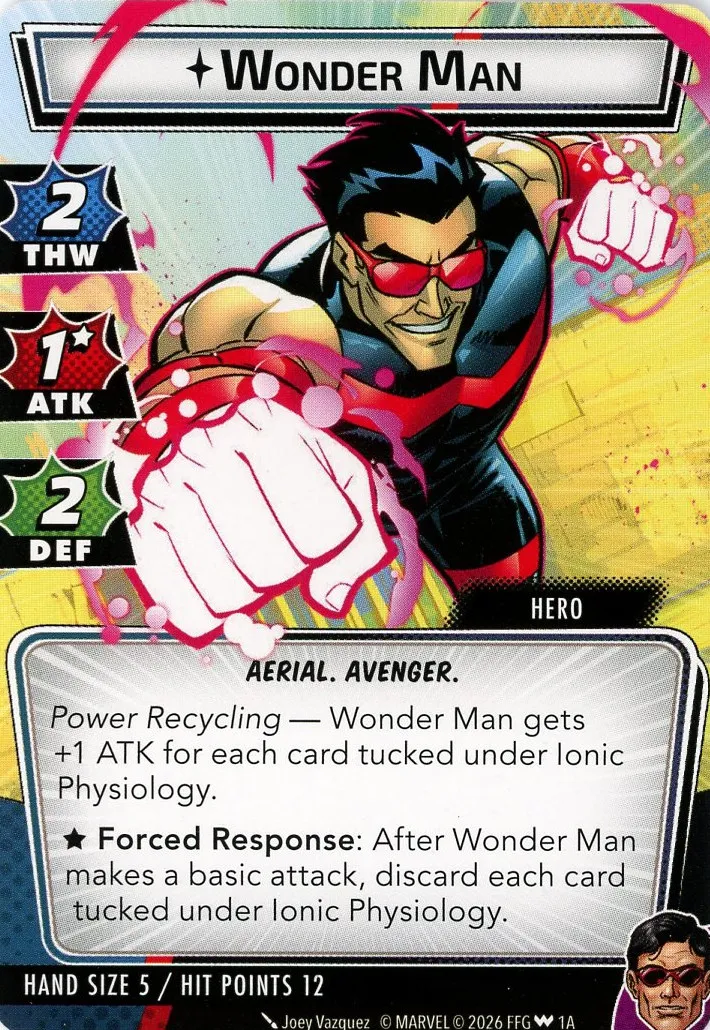
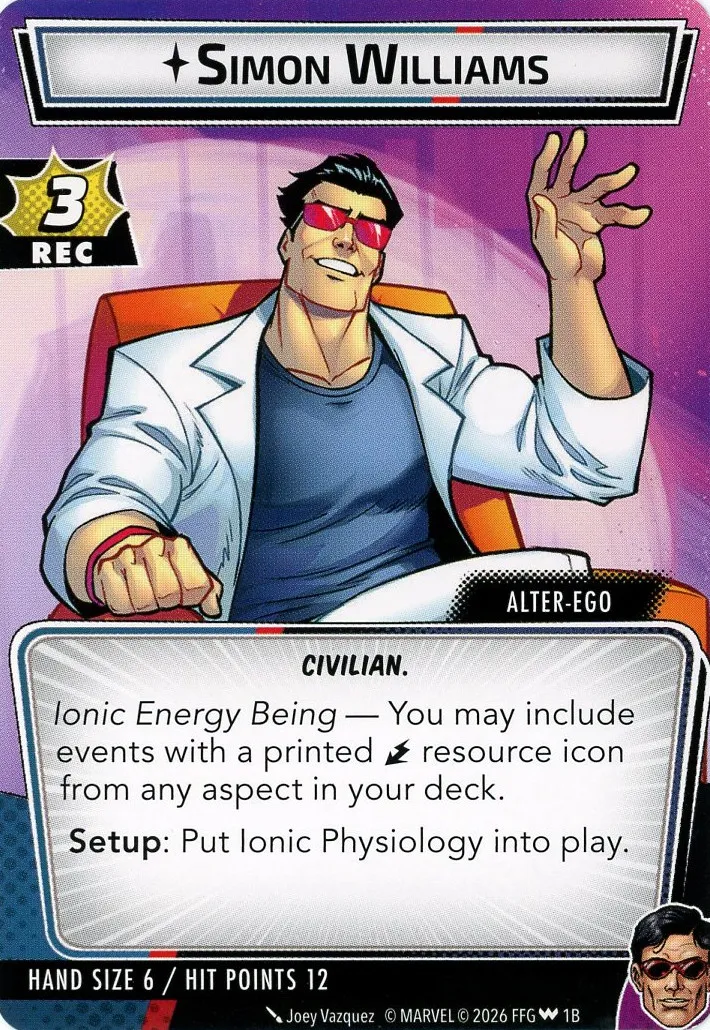
Simon Williams is a villain who couldn’t go through with it. An industrialist crushed by Stark Industries, he embezzles from his own company, gets caught, and blames Tony Stark for his downfall.
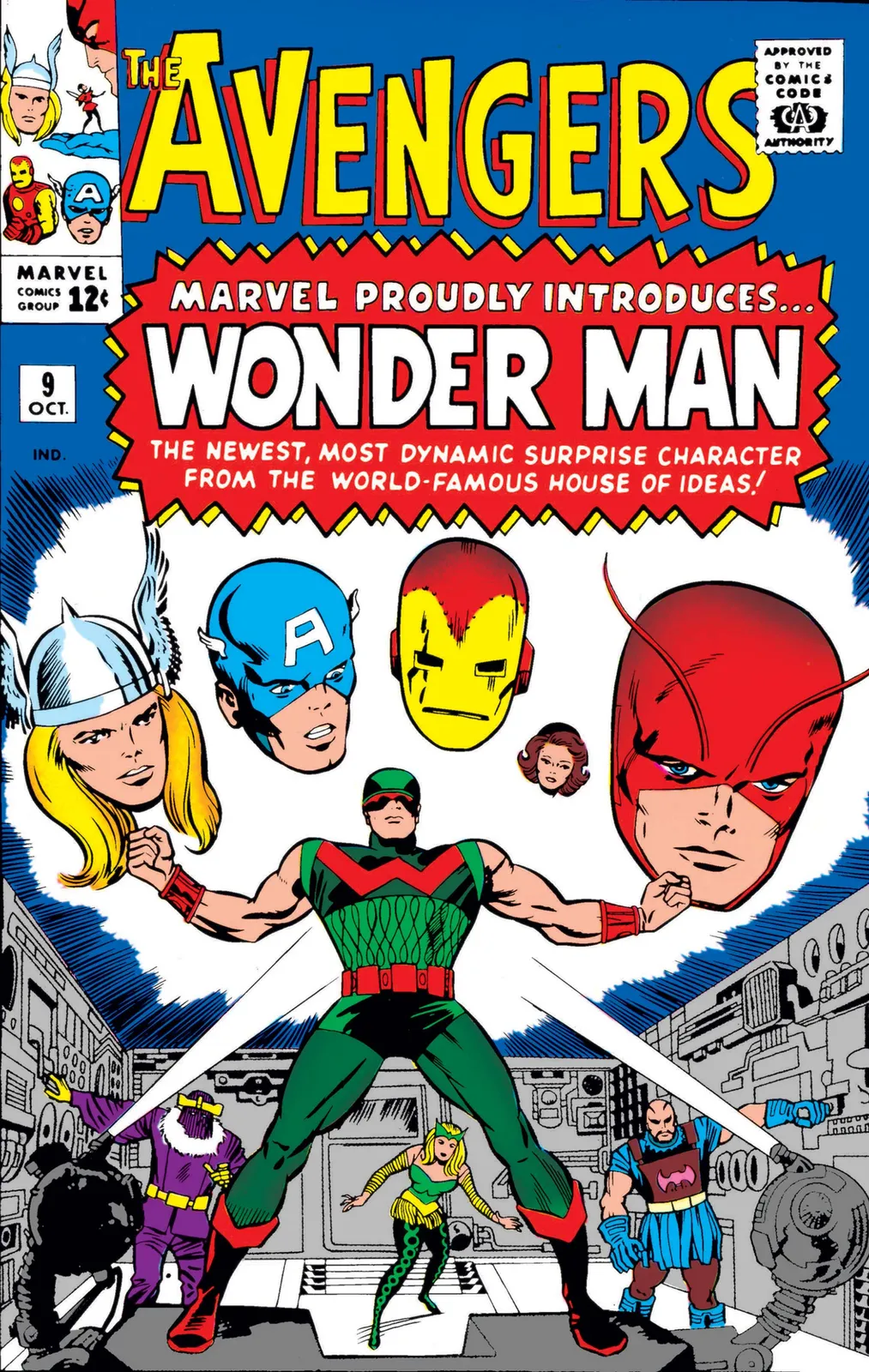
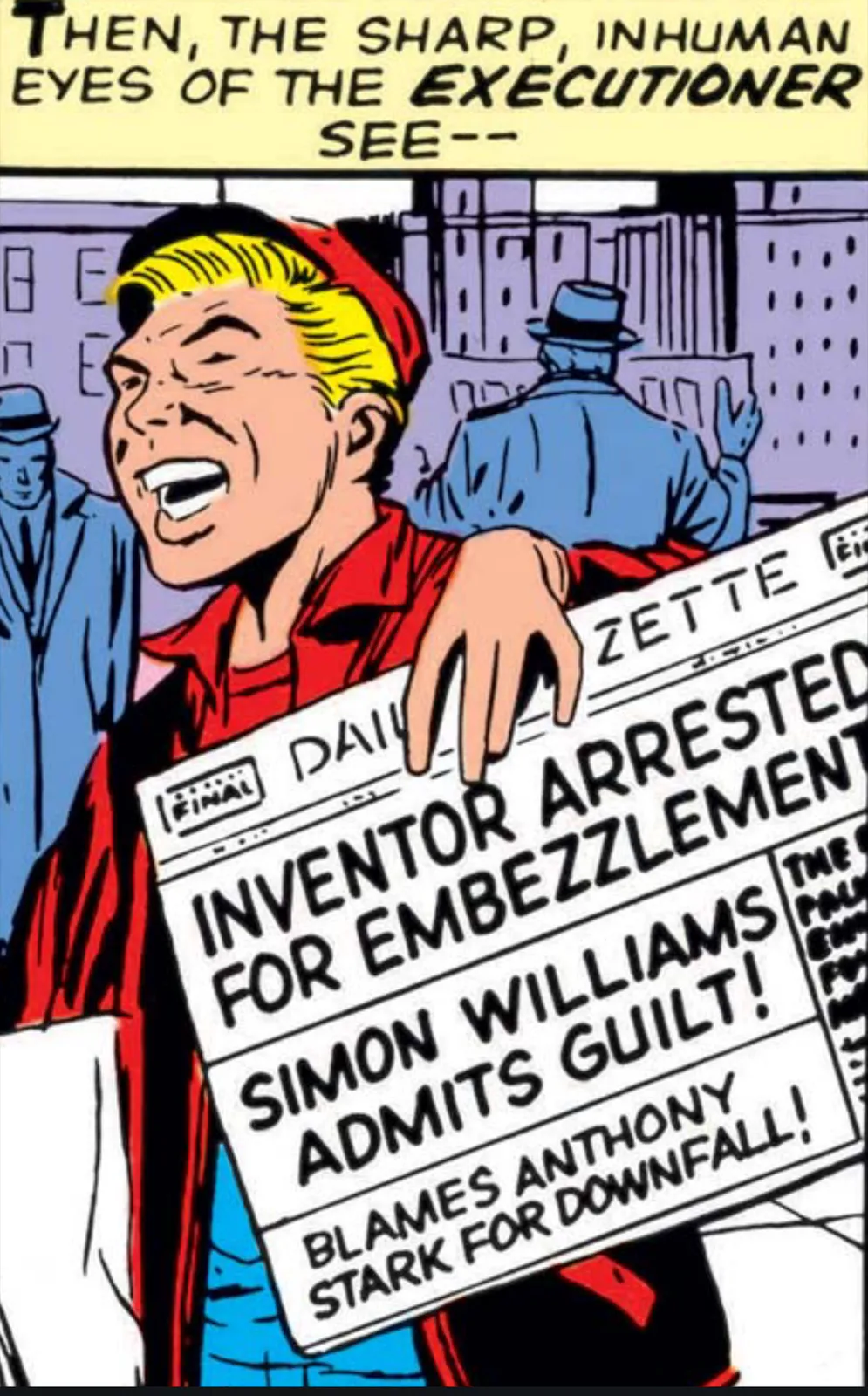
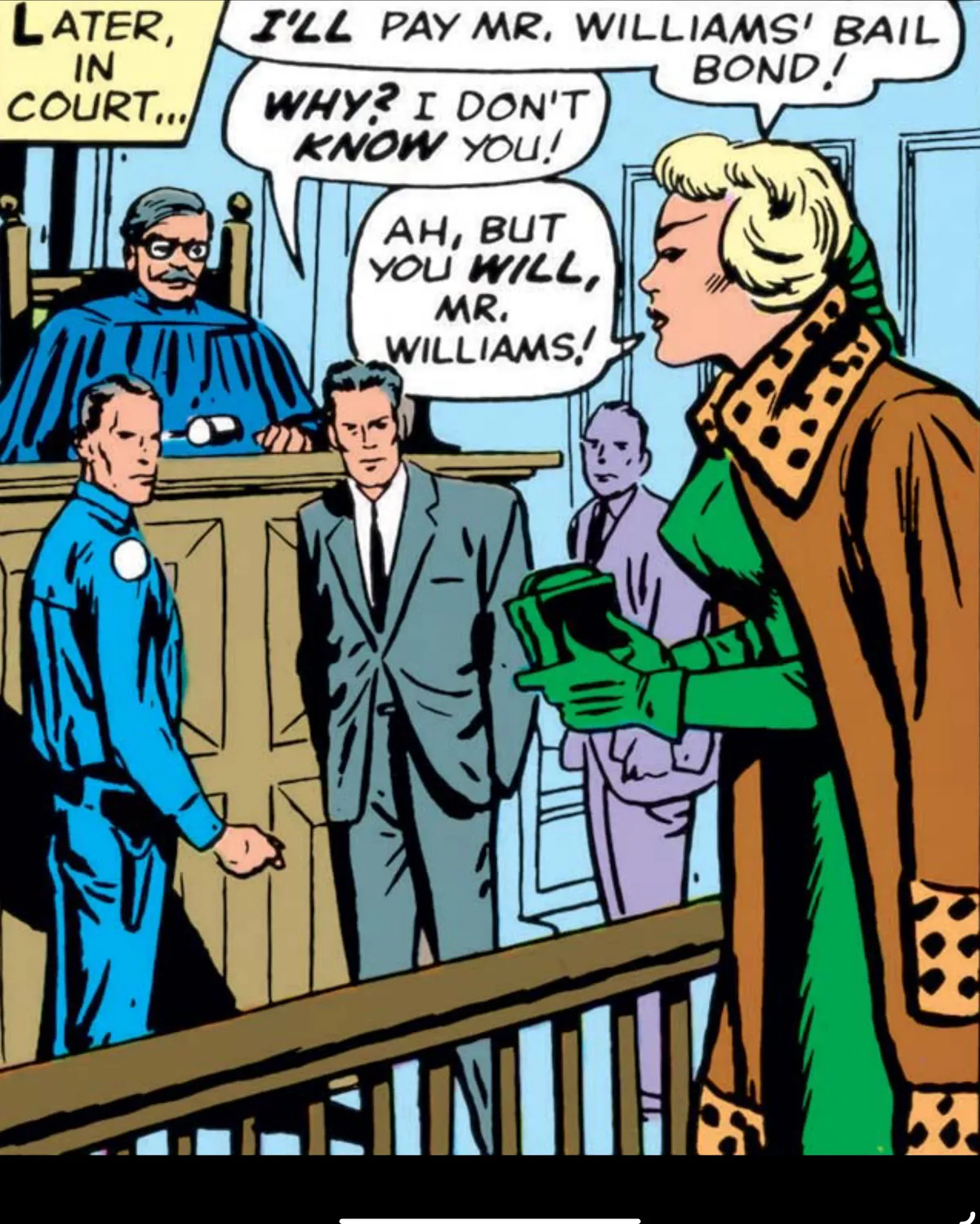
Baron Zemo sees a tool. The Enchantress pays Simon’s bail, and Zemo offers him revenge through an ionic ray treatment. The price: Simon becomes Zemo’s weapon, joins the Avengers as a double agent and leads them into a trap (Avengers (1963) #9).
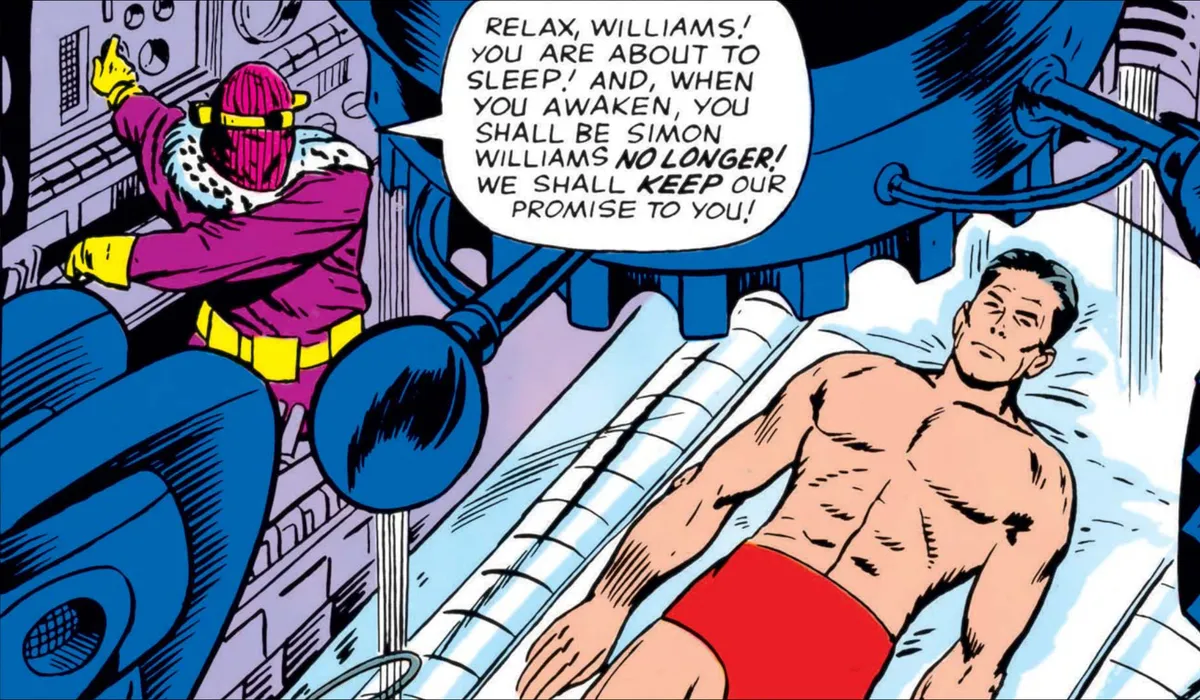
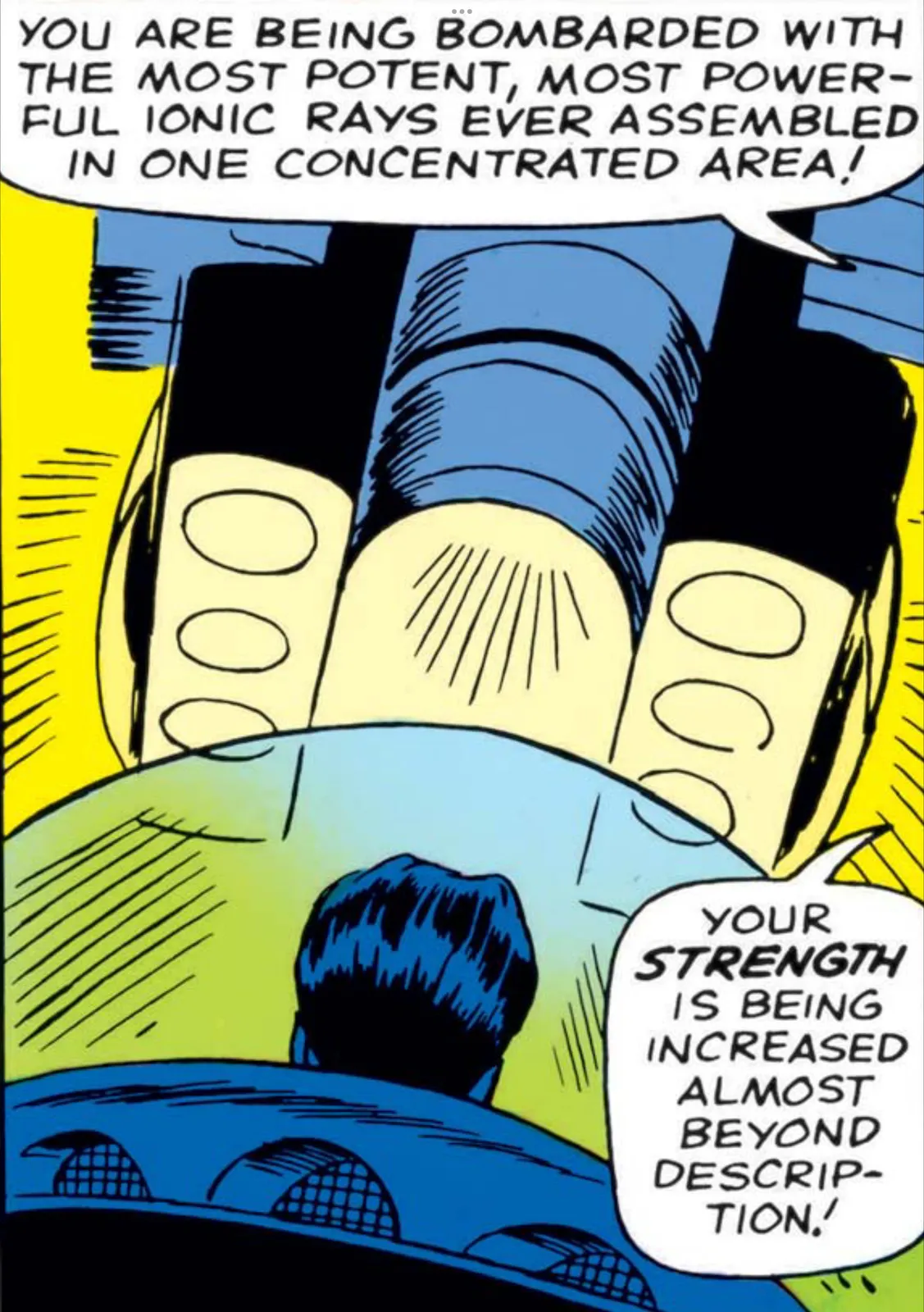
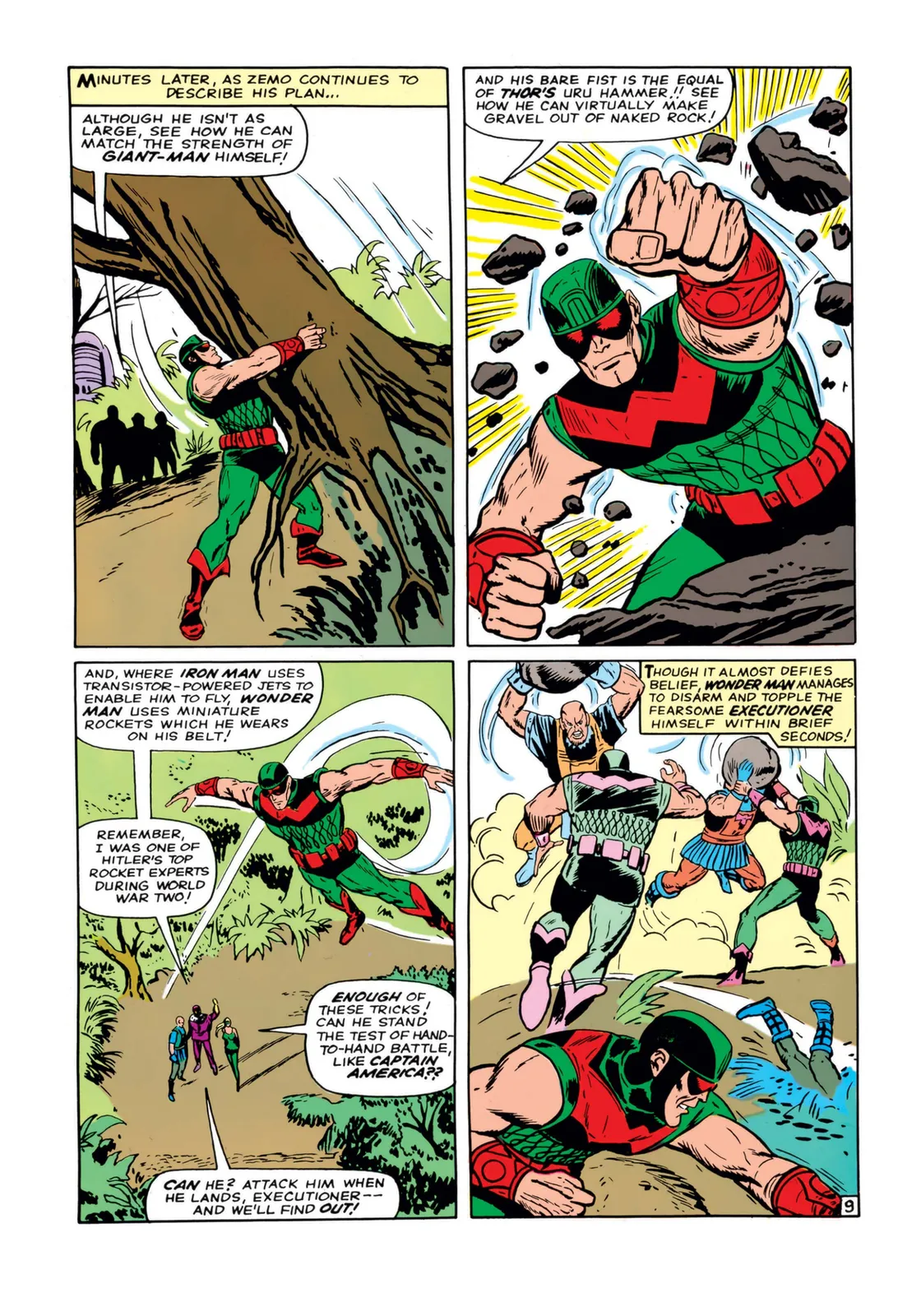
Zemo sells his creation as a god: as strong as Giant-Man, with a bare fist the equal of Thor’s hammer. Our game agrees that this is divine territory. Out of more than 60 heroes, only 4 print 3ATK: Hercules, Hulk, She-Hulk and Ant-Man in his Giant-Man form. Thor himself prints 2ATK. Wonder Man starts at 1ATK, gains +1ATK per card tucked under Ionic Physiology, and peaks at 4ATK with 3 cards. For one punch, Simon hits harder than the gods.
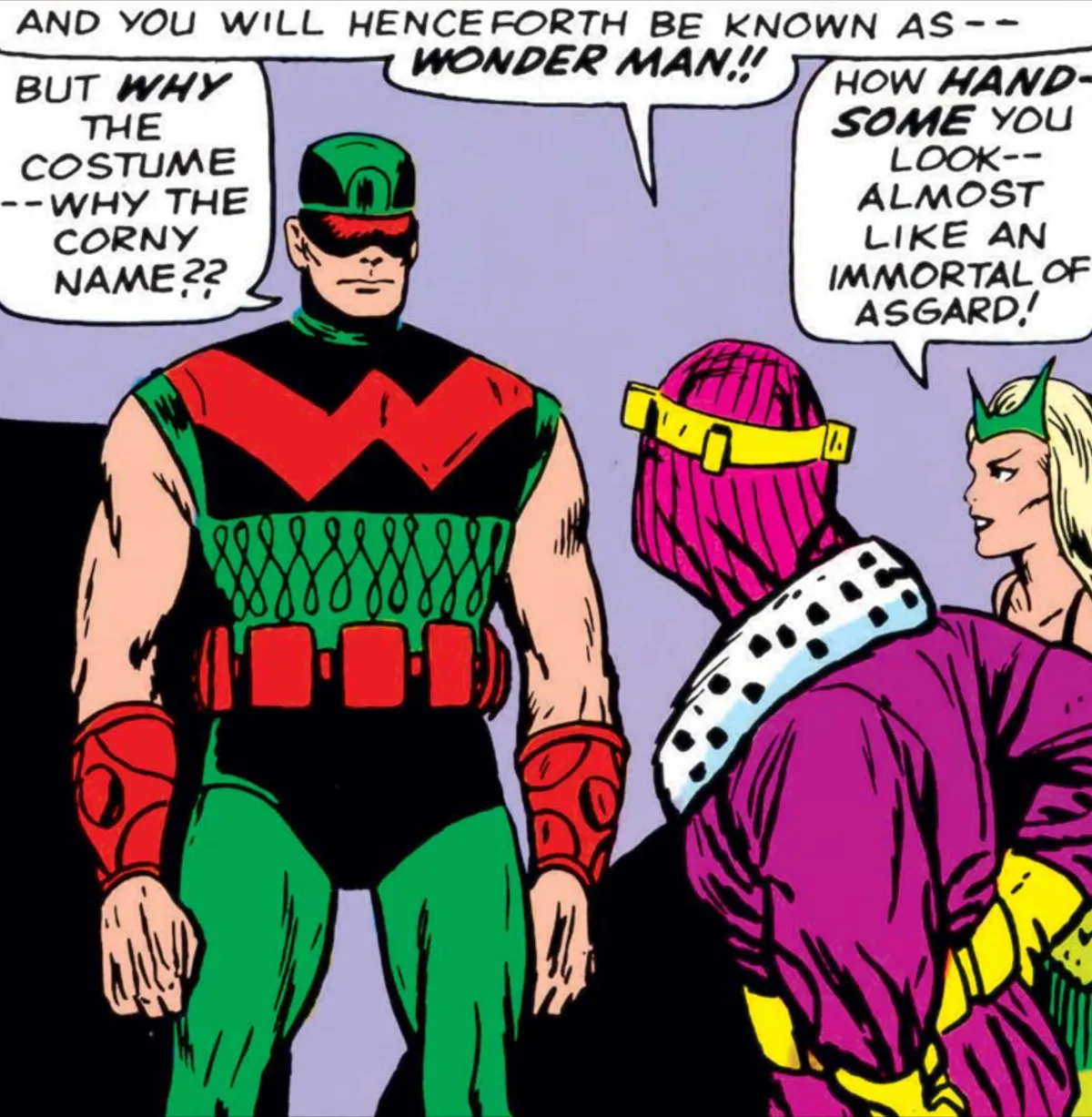
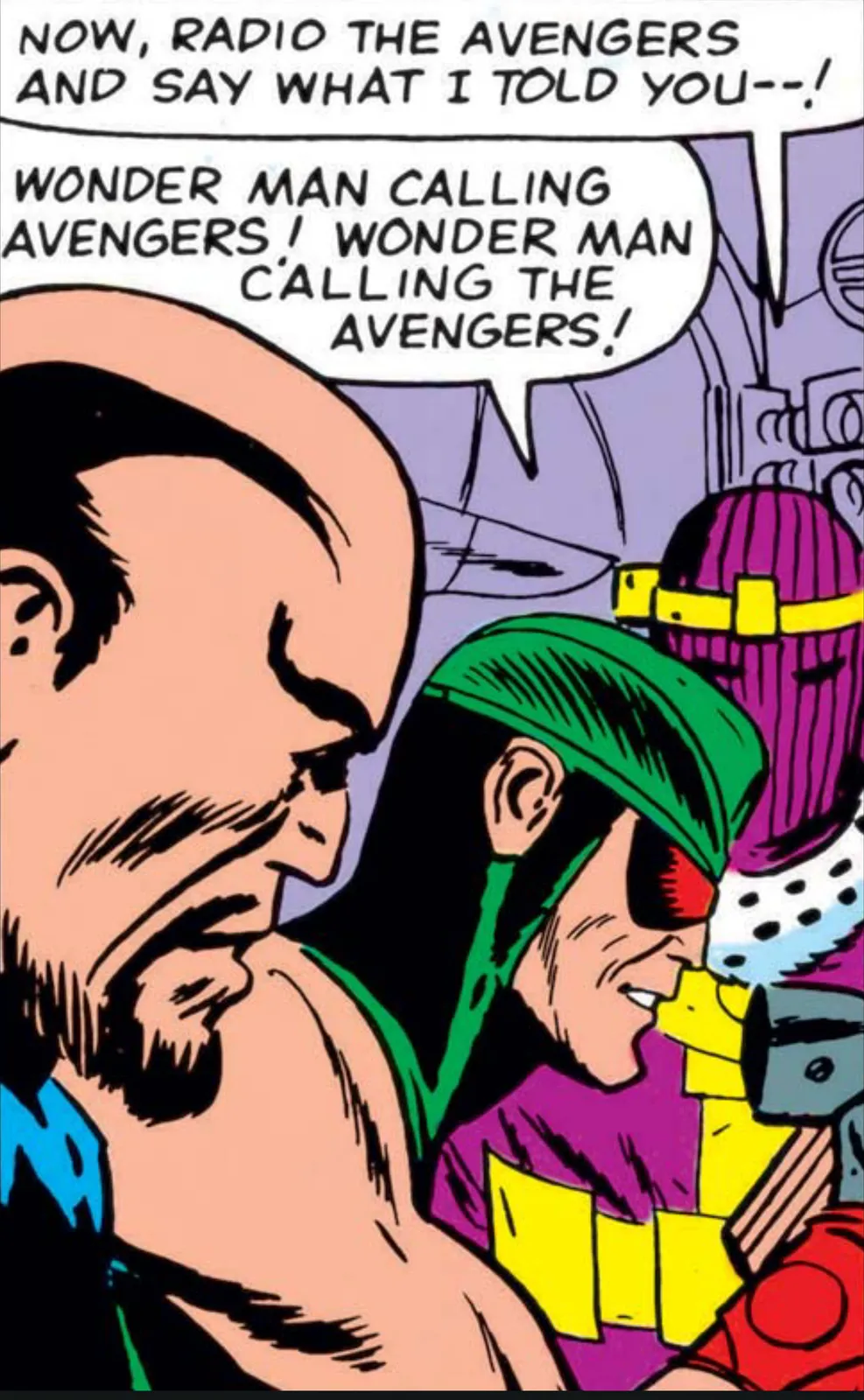
The name itself is a dig. Simon asks why the corny name, Zemo answers that superheroes always have ridiculous names, and Simon agrees. In 1964, while DC sold Wonder Woman, Marvel had its villain mock the whole genre on the page.
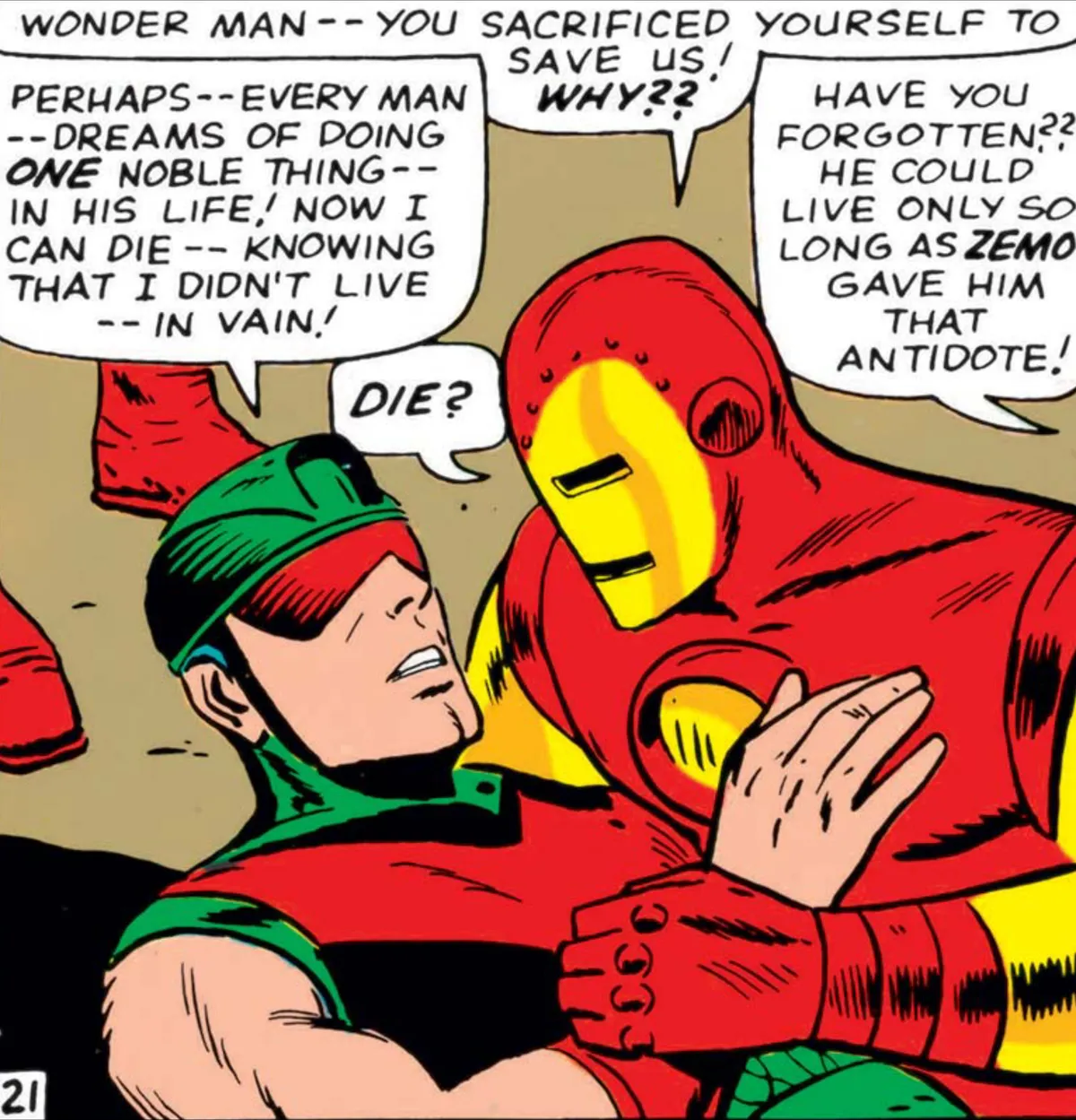
Zemo keeps a leash on his weapon: the treatment is killing Simon, and only Zemo’s antidote keeps him alive. Simon turns on his master anyway and dies in his very first appearance. “Perhaps every man dreams of doing one noble thing in his life.”
A brain for Vision
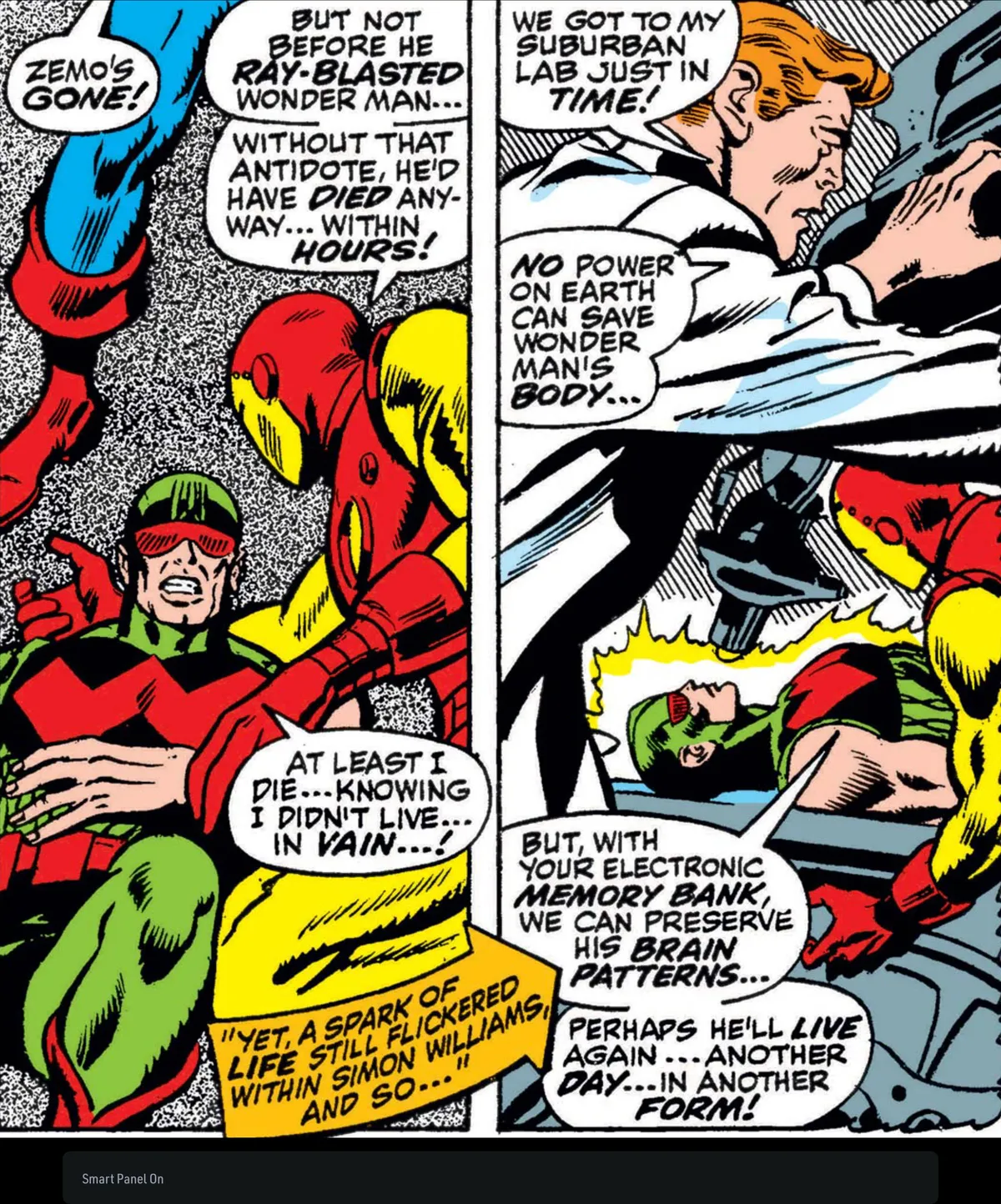
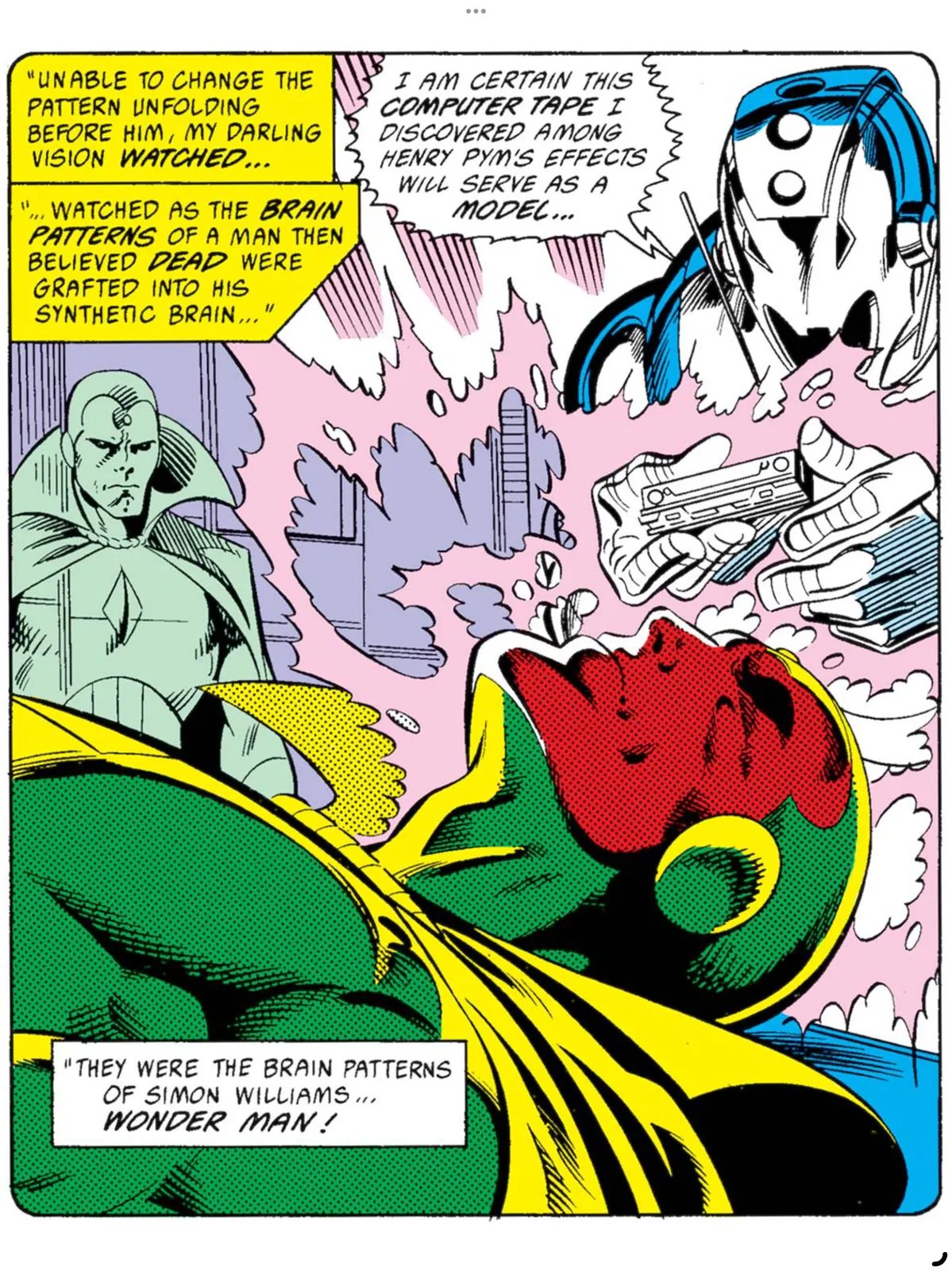
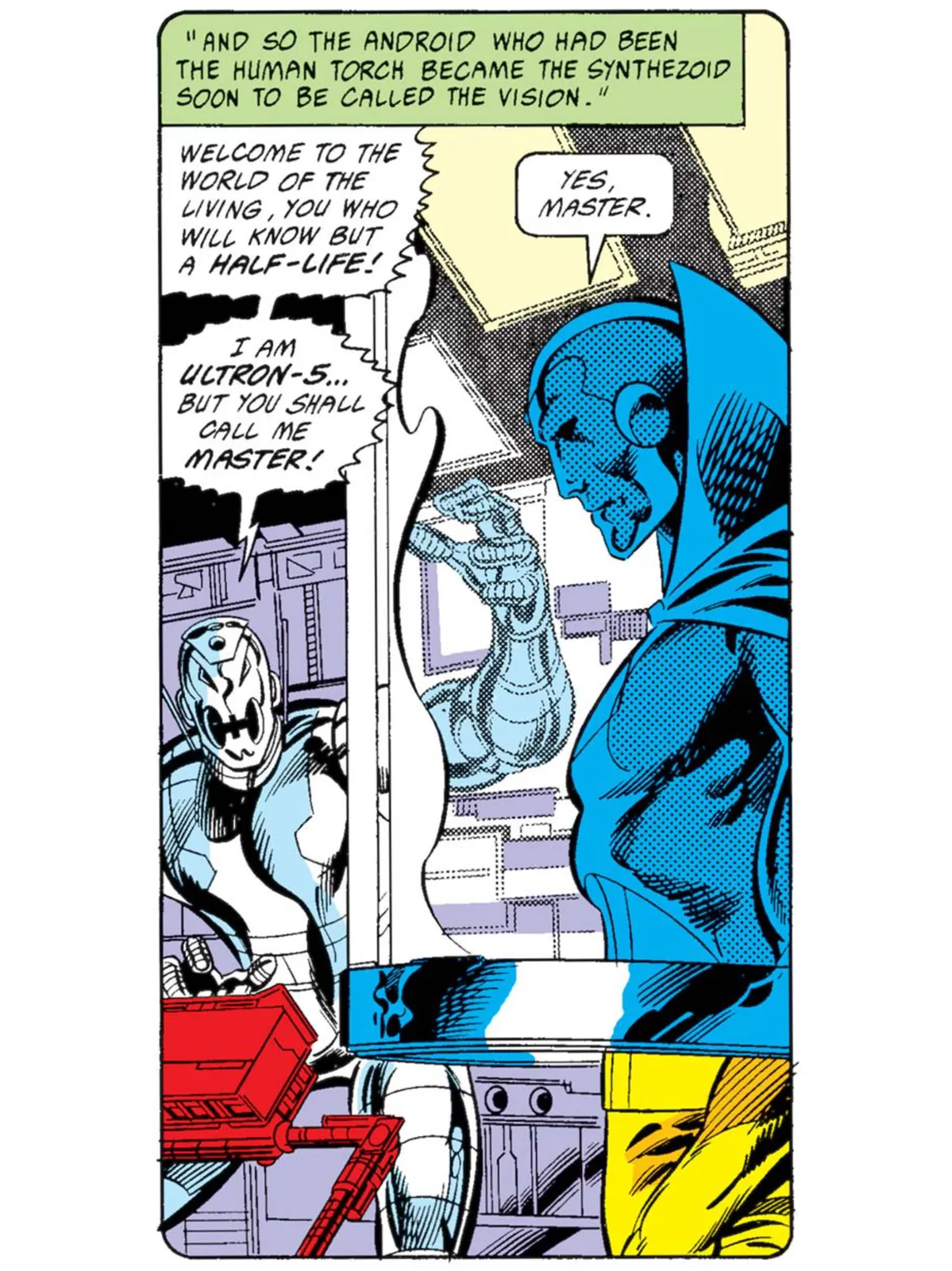
Simon’s mind survives his body, and that makes him the Vision’s brother. Hank Pym recorded Simon’s brain patterns as he was dying. Ultron stole the tape to build the Vision (Avengers (1963) #57), and the team uncovered the theft one issue later (#58). Keep this in mind: it matters for his nemesis and for the Scarlet Witch.
Back from the dead
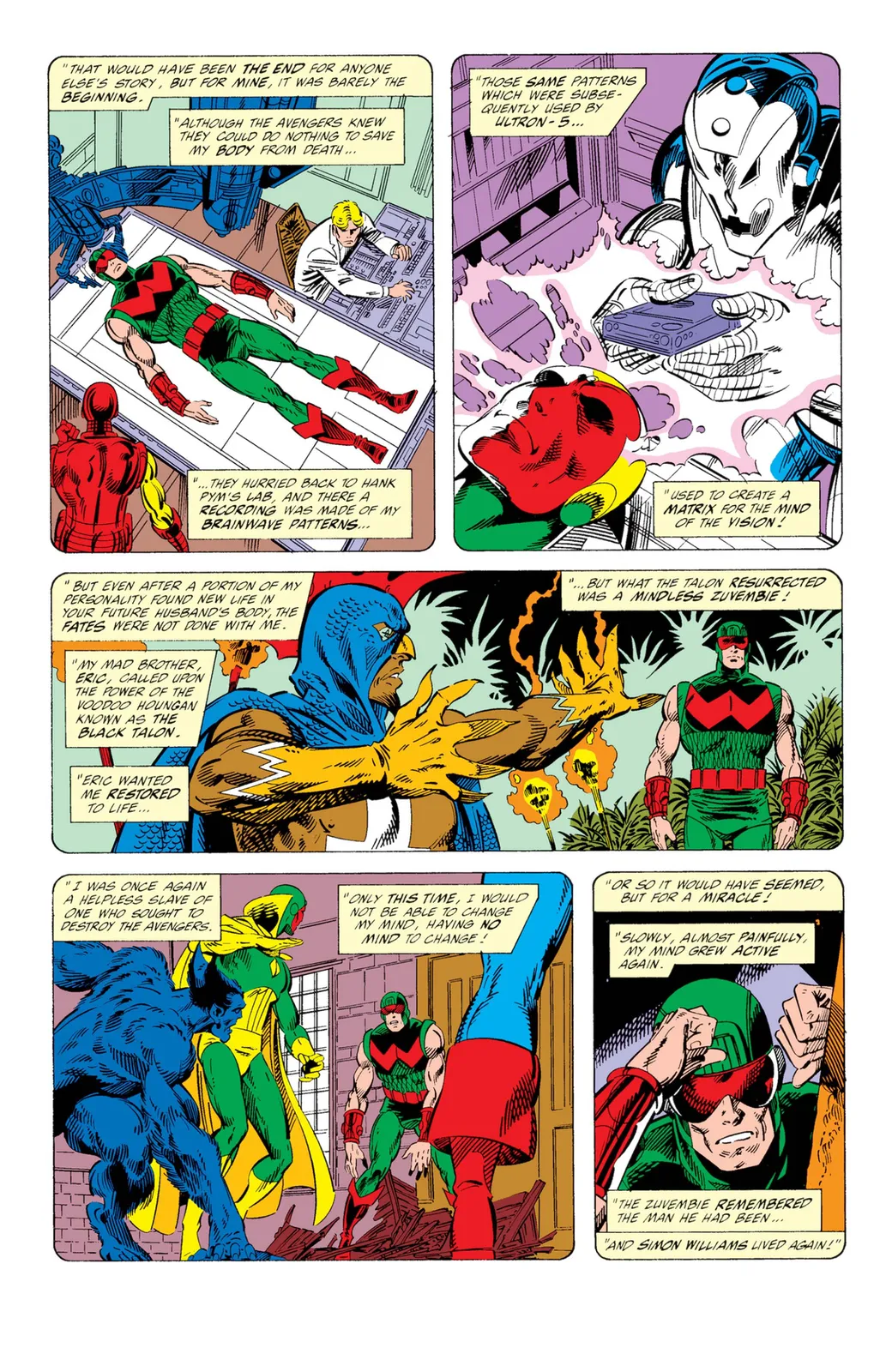
Simon dies more often than he changes costume. His brother Eric, the Grim Reaper, has the voodoo priest Black Talon raise him as a mindless zuvembie, 142 issues after his death (Avengers (1963) #151 and #152). His mind slowly comes back. The ionic energy hadn’t killed him: it had turned him into something else, as he learns in #164.
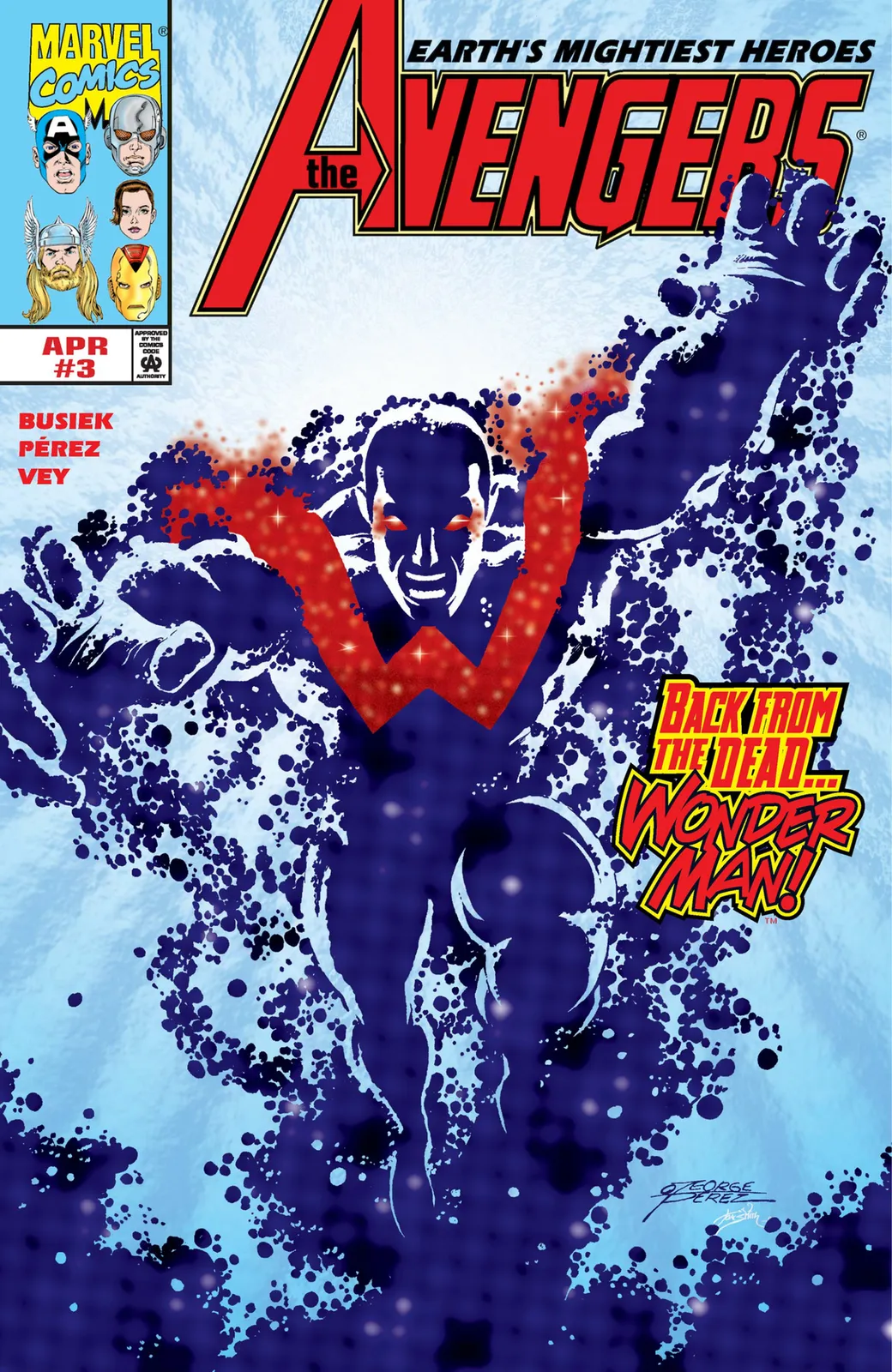
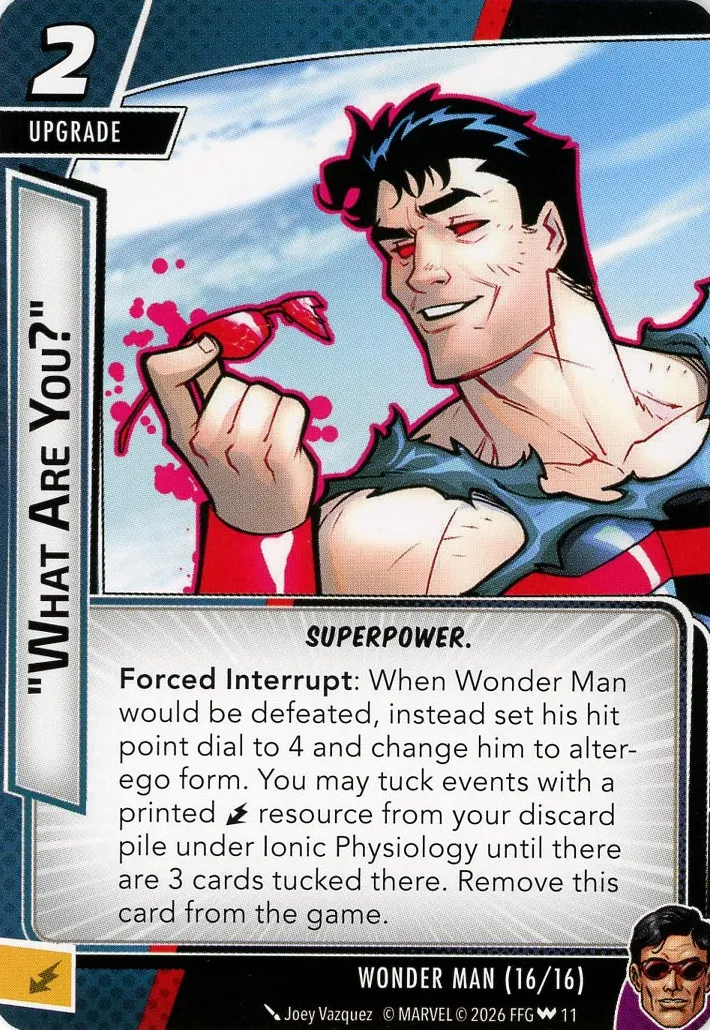
He dies again in Force Works (1994) #1, scattered by a Kree ion cannon. Kurt Busiek and George Pérez bring him back as a being of pure ionic energy: the Scarlet Witch summons him in Avengers (1998) #2, he blows himself up in #3, and she fully restores him in #11. No organs, no blood: a body of violet light held together by willpower alone.
“What Are You?” is that story in one card. When Wonder Man would be defeated, he isn’t: he reverts to Simon and reloads his ionic energy.
Everything ionic
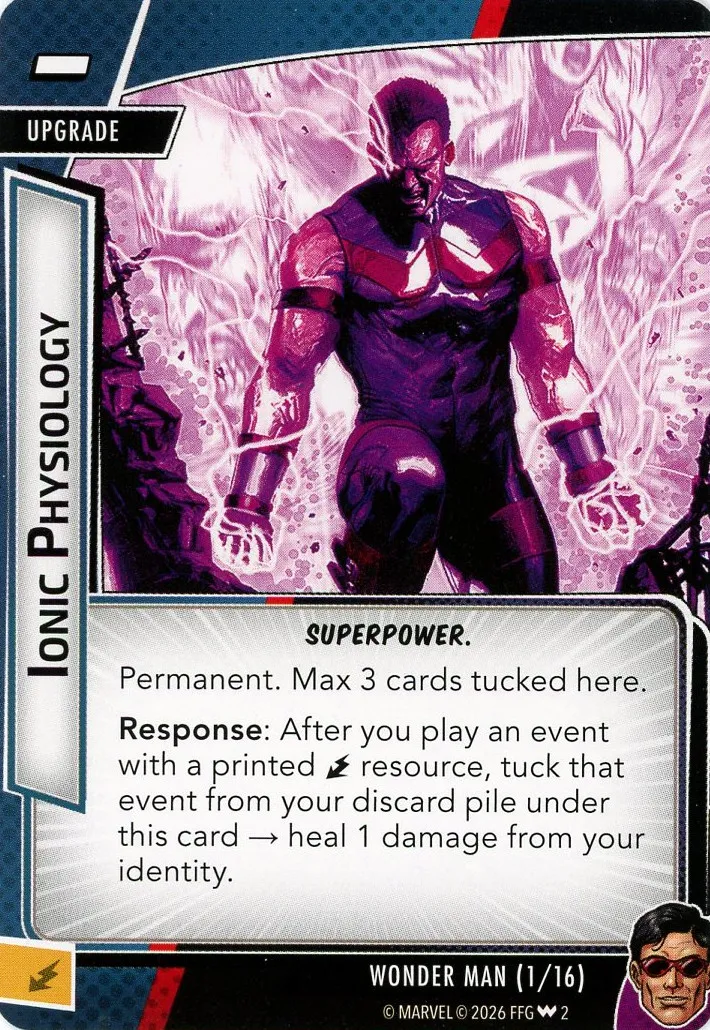
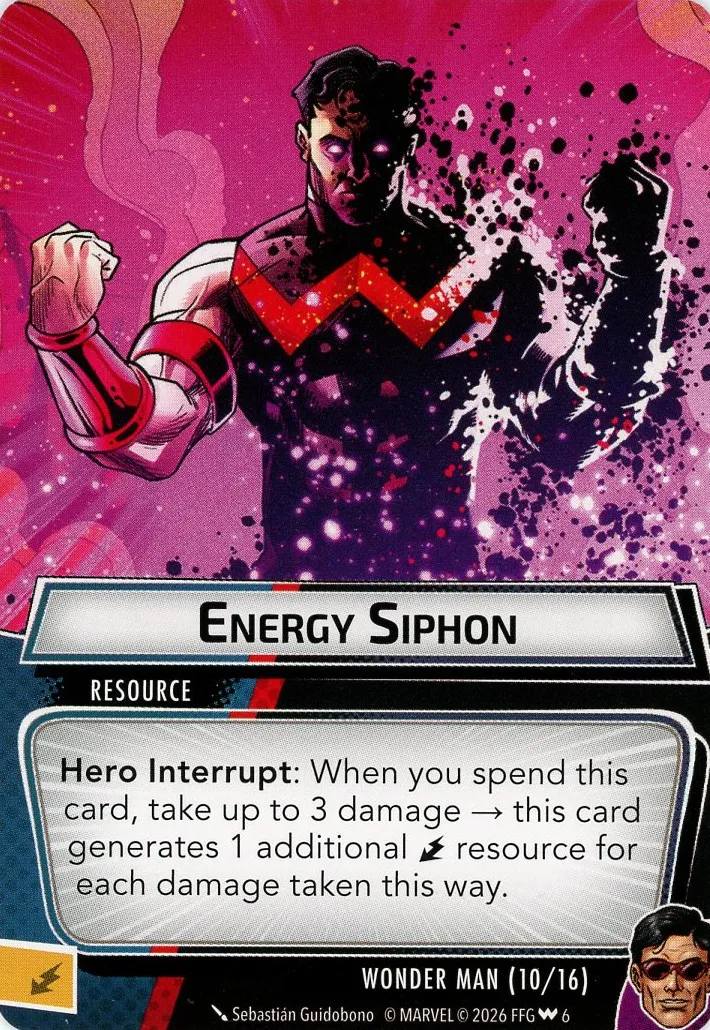
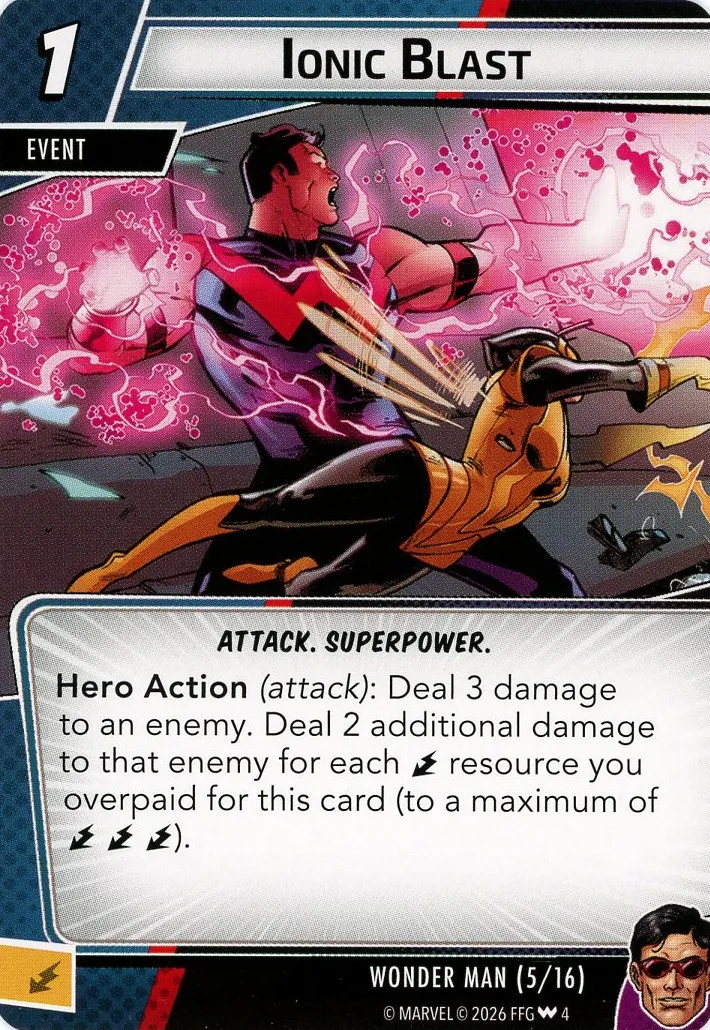
A man made of ions runs on the energy resource, and the whole deck pivots on it. Simon’s alter-ego lets you include events from any aspect, as long as they print an energy resource. Overpay with energy, then tuck the event under Ionic Physiology to recycle the power. Take it from a GANIL alumnus: a body of ions would leave you electrically charged, not superstrong. The game is closer to the comics than to physics: Simon siphons ions, heals with them and releases them in a blast.

The window is wide. 86 aspect and basic events print an energy resource. Basic ones were always allowed, so count the other aspects only. In a Justice deck: 15 Aggression + 16 Leadership + 22 Protection + 2 Pool = 55 extra events. The narrowest choice is Protection, which still opens 47.
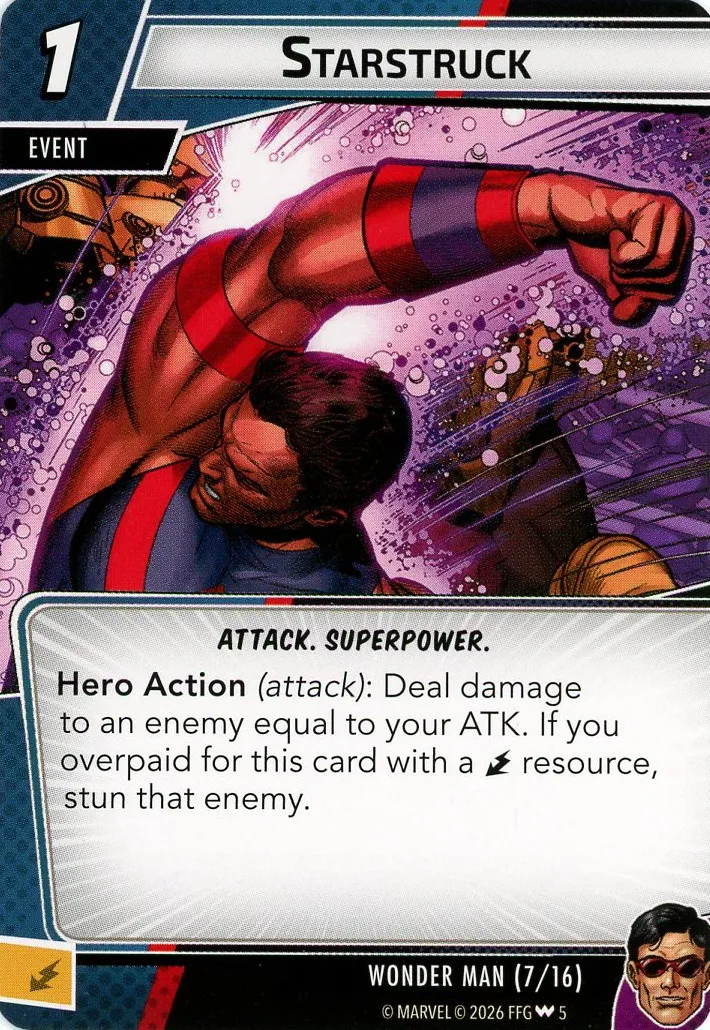
Starstruck is a Tex Avery punch, little stars spinning around the victim’s head. I found no comics panel for this uppercut, but the pun lands: being starstruck is what happens when you meet a movie star.
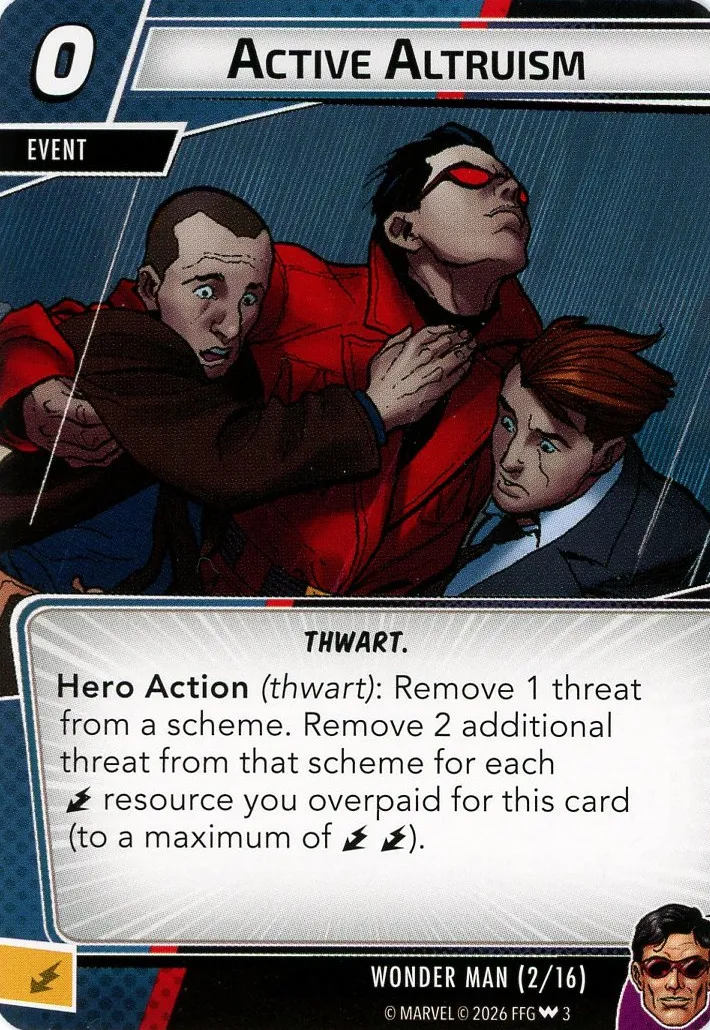
Active Altruism is Simon at his best: saving civilians before chasing villains.
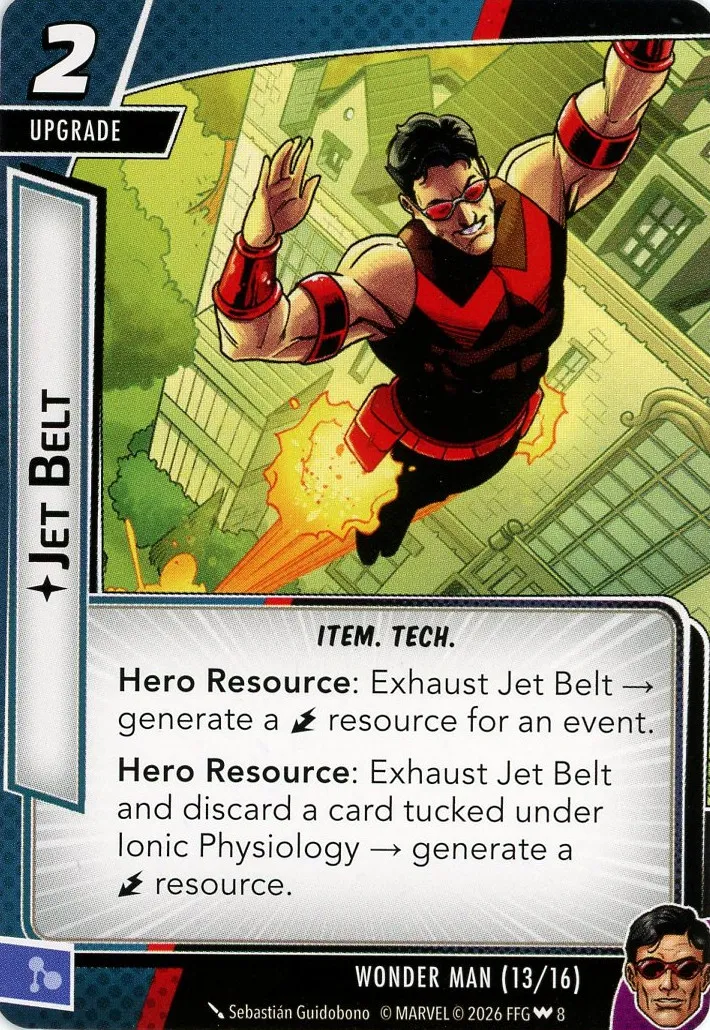
The Jet Belt is in Avengers #9. Look at Zemo’s demonstration above: where Iron Man uses transistor-powered jets, Wonder Man uses miniature rockets on his belt (Zemo reminds us he was one of Hitler’s top rocket experts). Simon later learns to fly on his own, but keeps the belt for the extra distance.
Signature Sunglasses
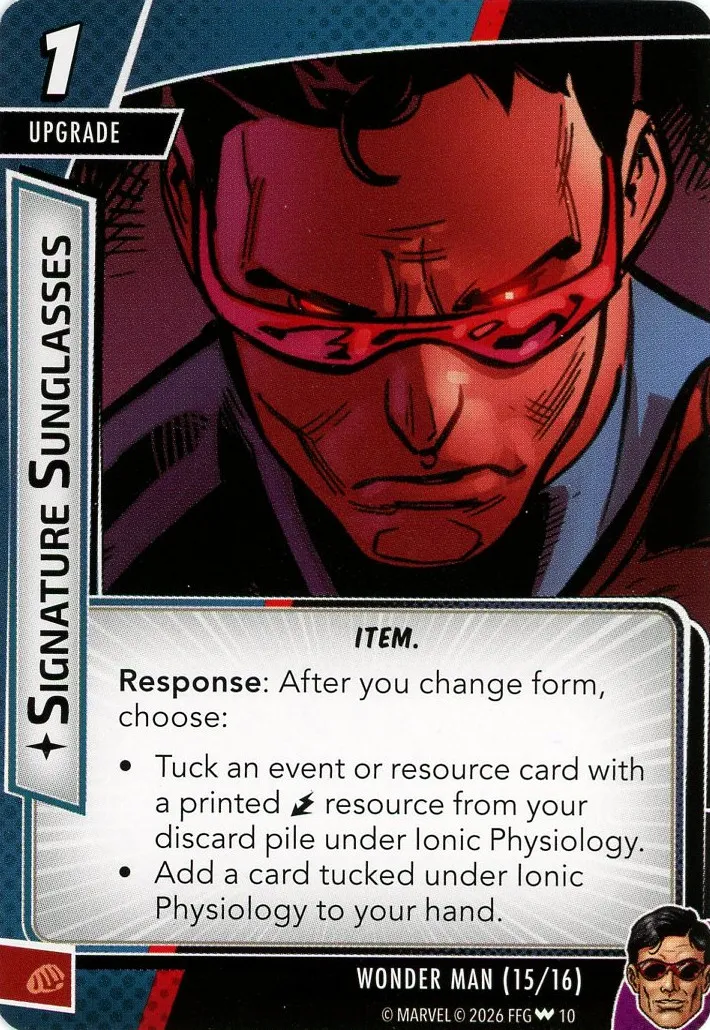
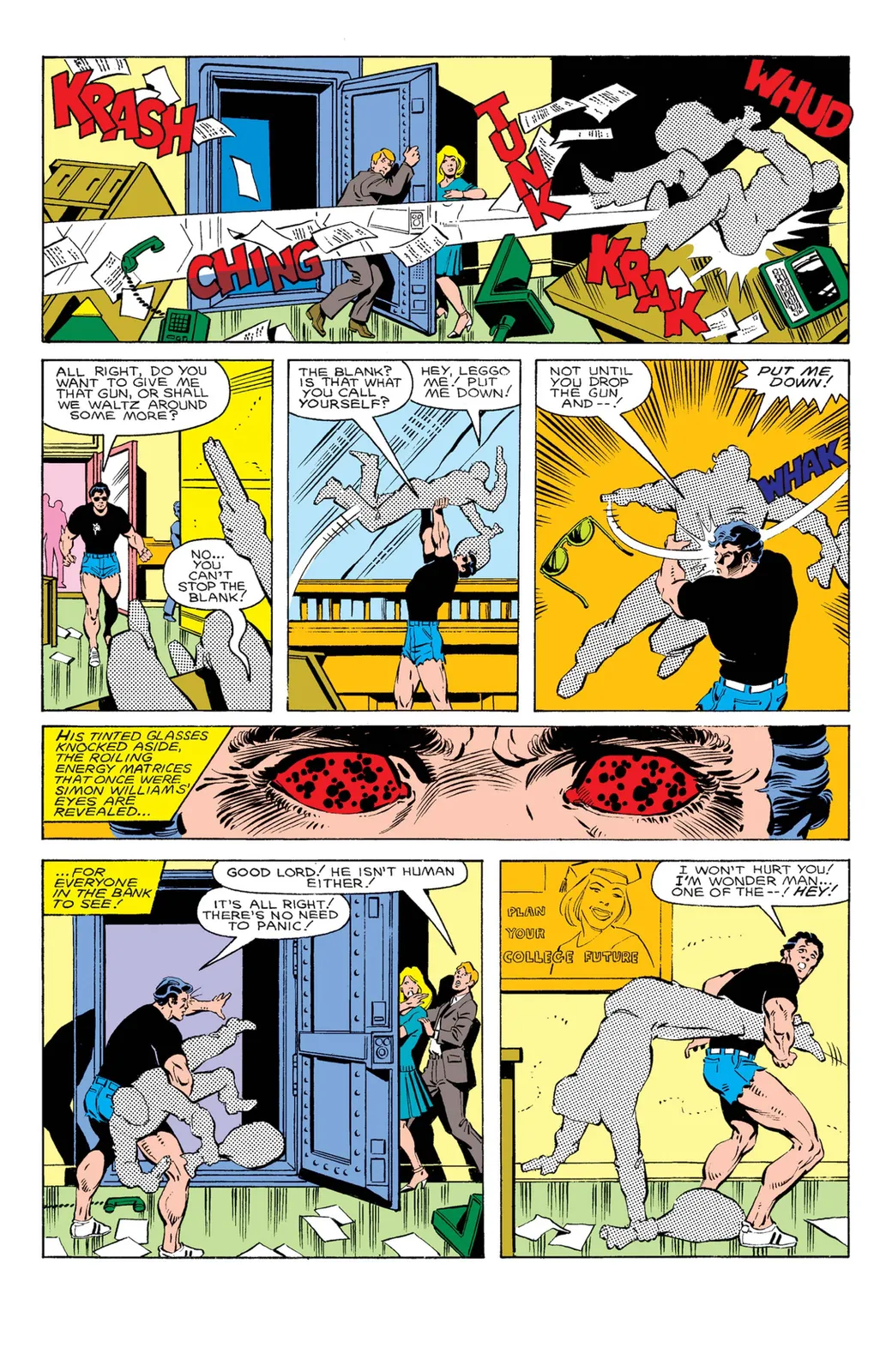
The sunglasses hide what Simon is. His eyes are roiling red energy, and when the villain the Blank knocks his glasses off in a bank, everyone in the room sees he isn’t human (West Coast Avengers (1984) #2). The Signature Sunglasses trigger when you change form, exactly when the glasses come on or off.
Mister Hollywood
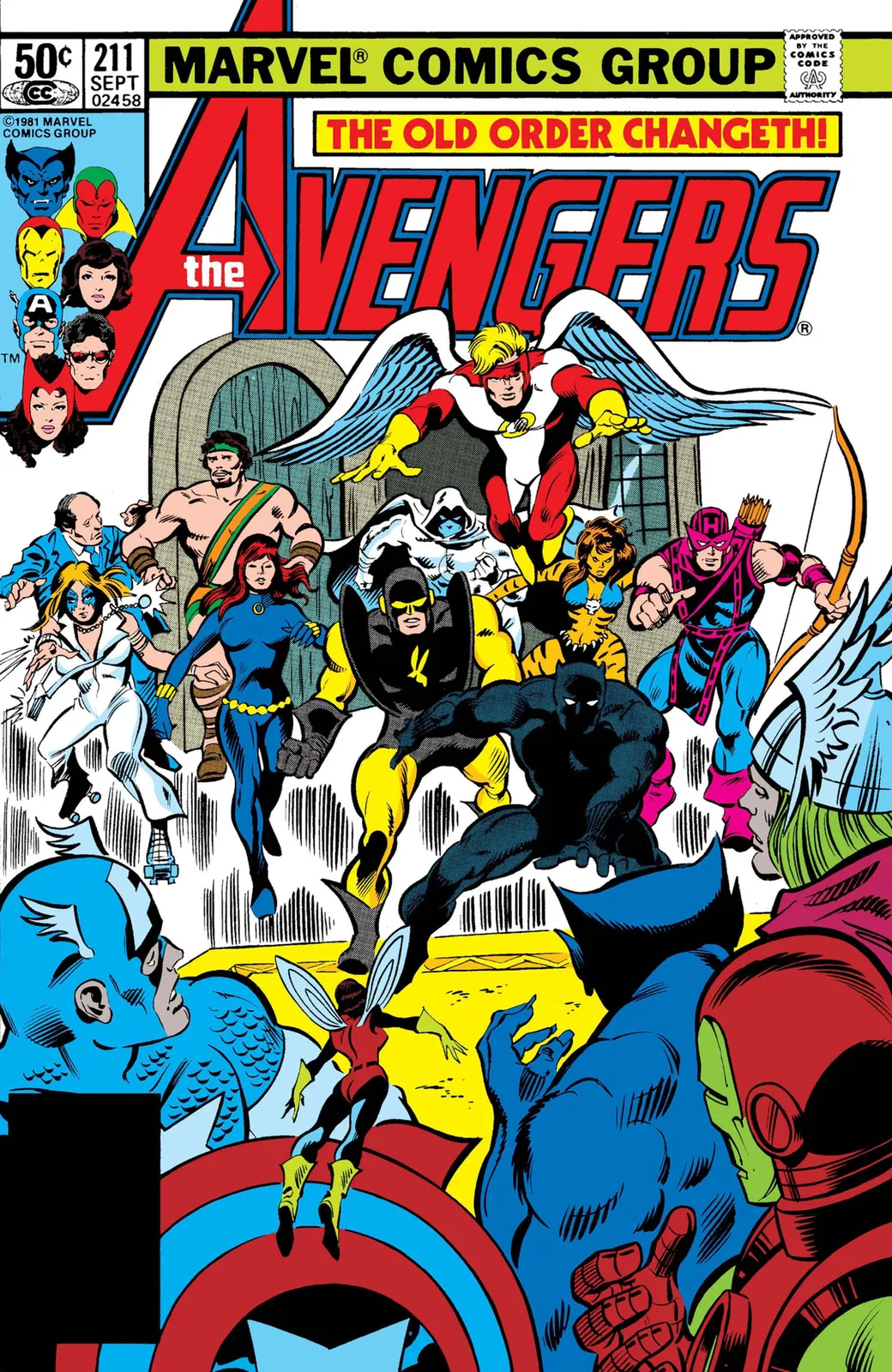
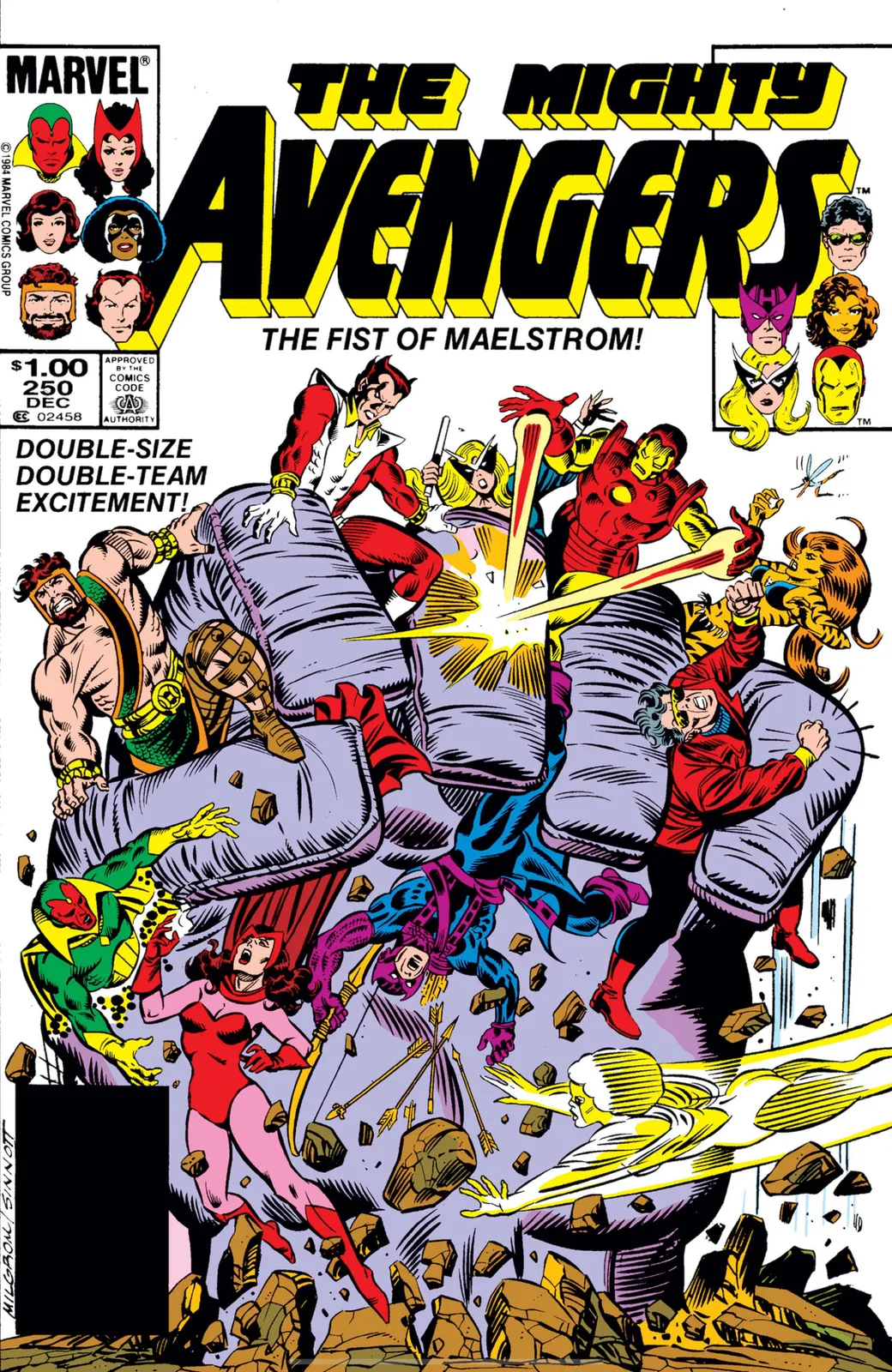
Hercules made Simon a movie star, and it started with a punch. In Avengers (1963) #211, Moondragon pushes heroes into brawling, and Hercules and Wonder Man trade blows.
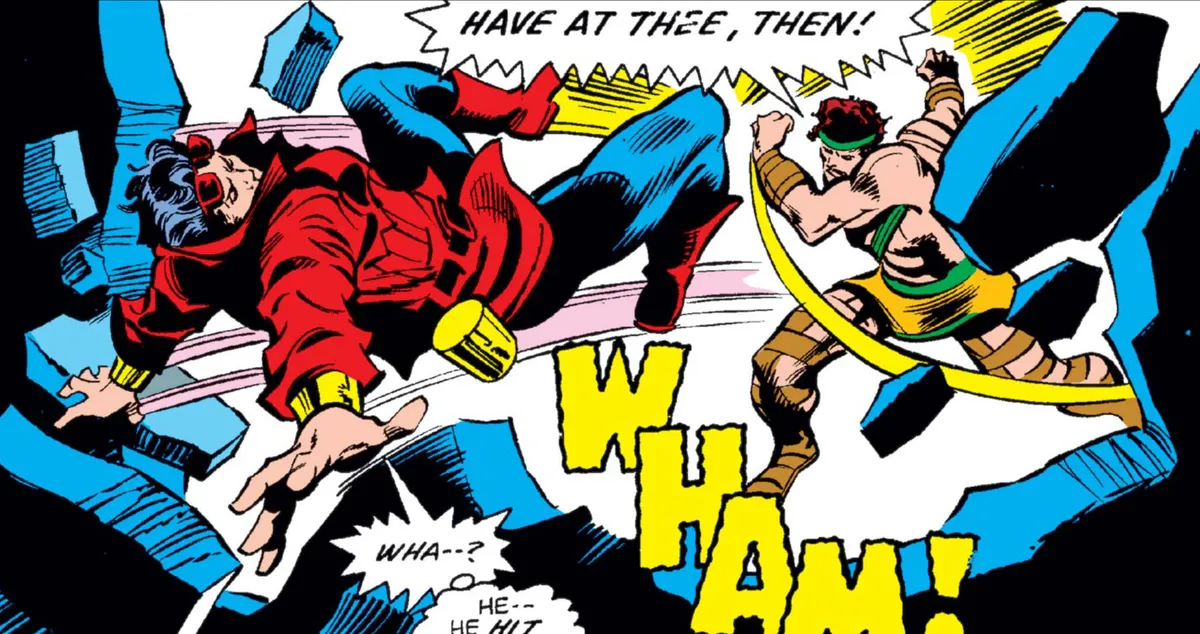
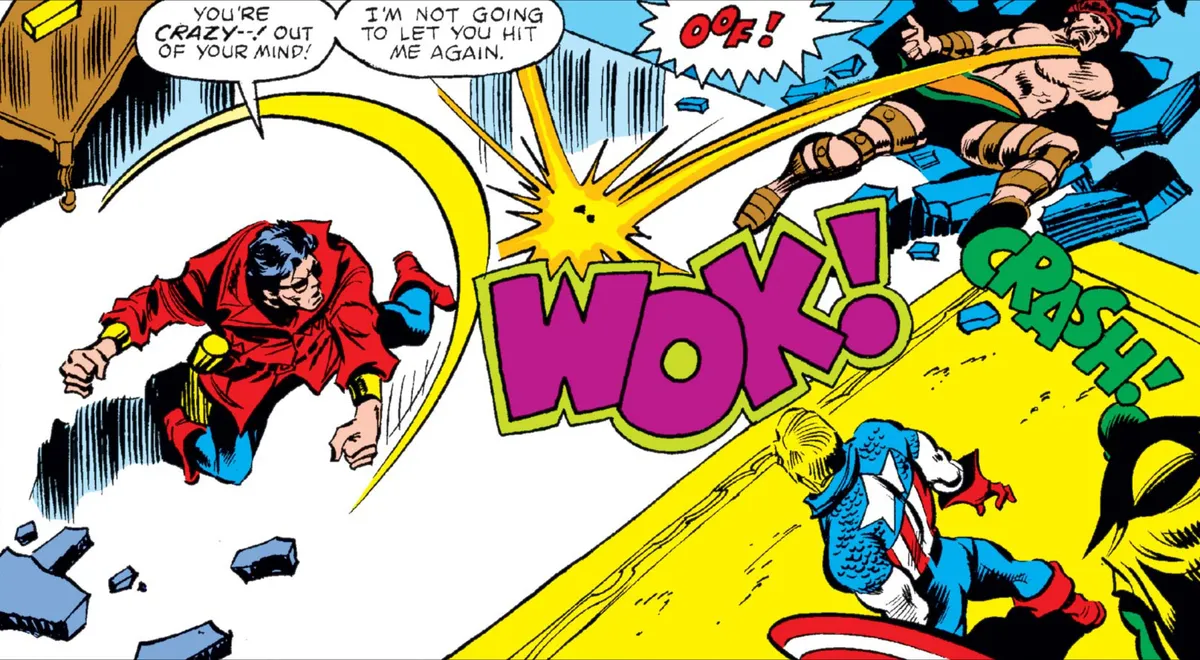
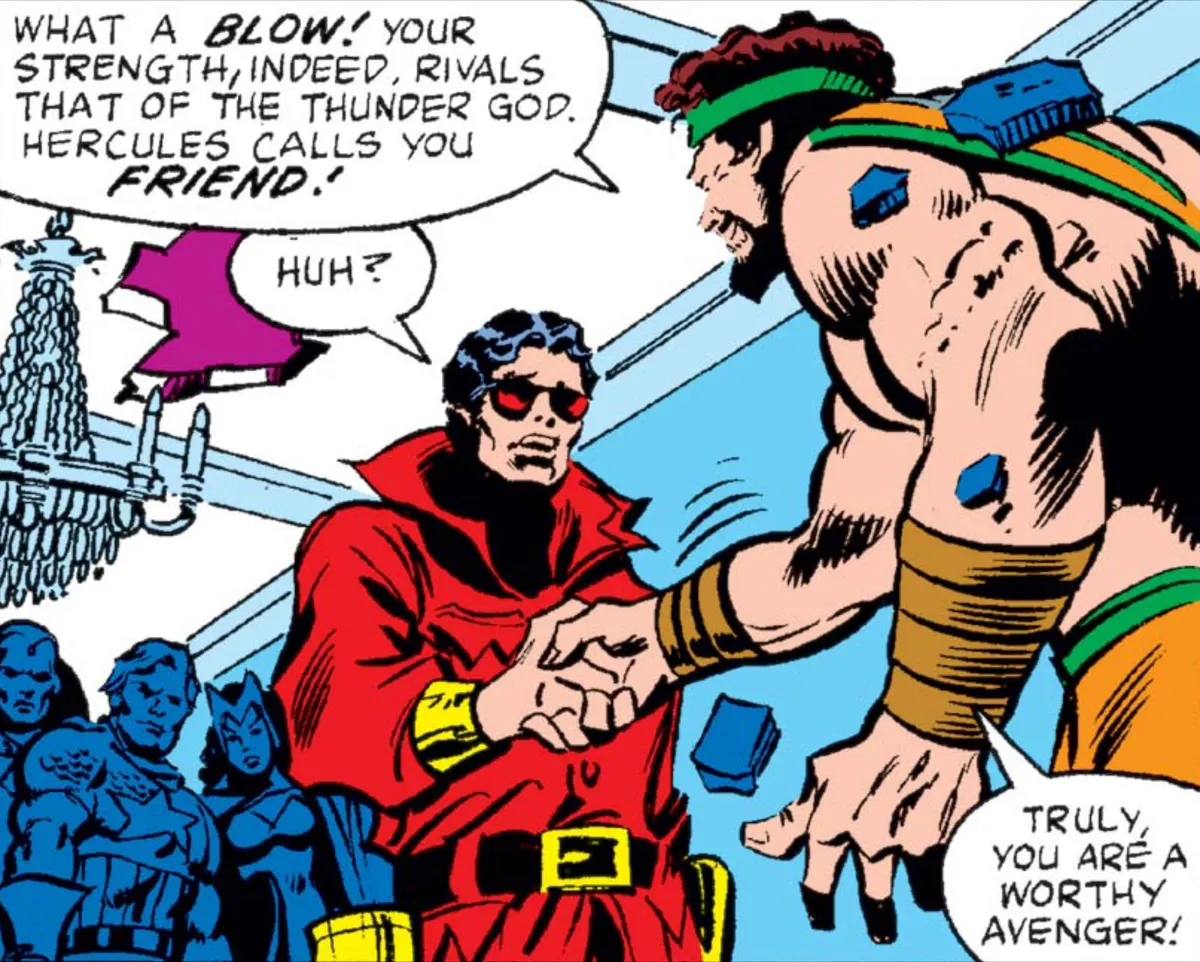
“Your strength, indeed, rivals that of the Thunder God. Hercules calls you friend!” With Hercules, respect is earned with fists.
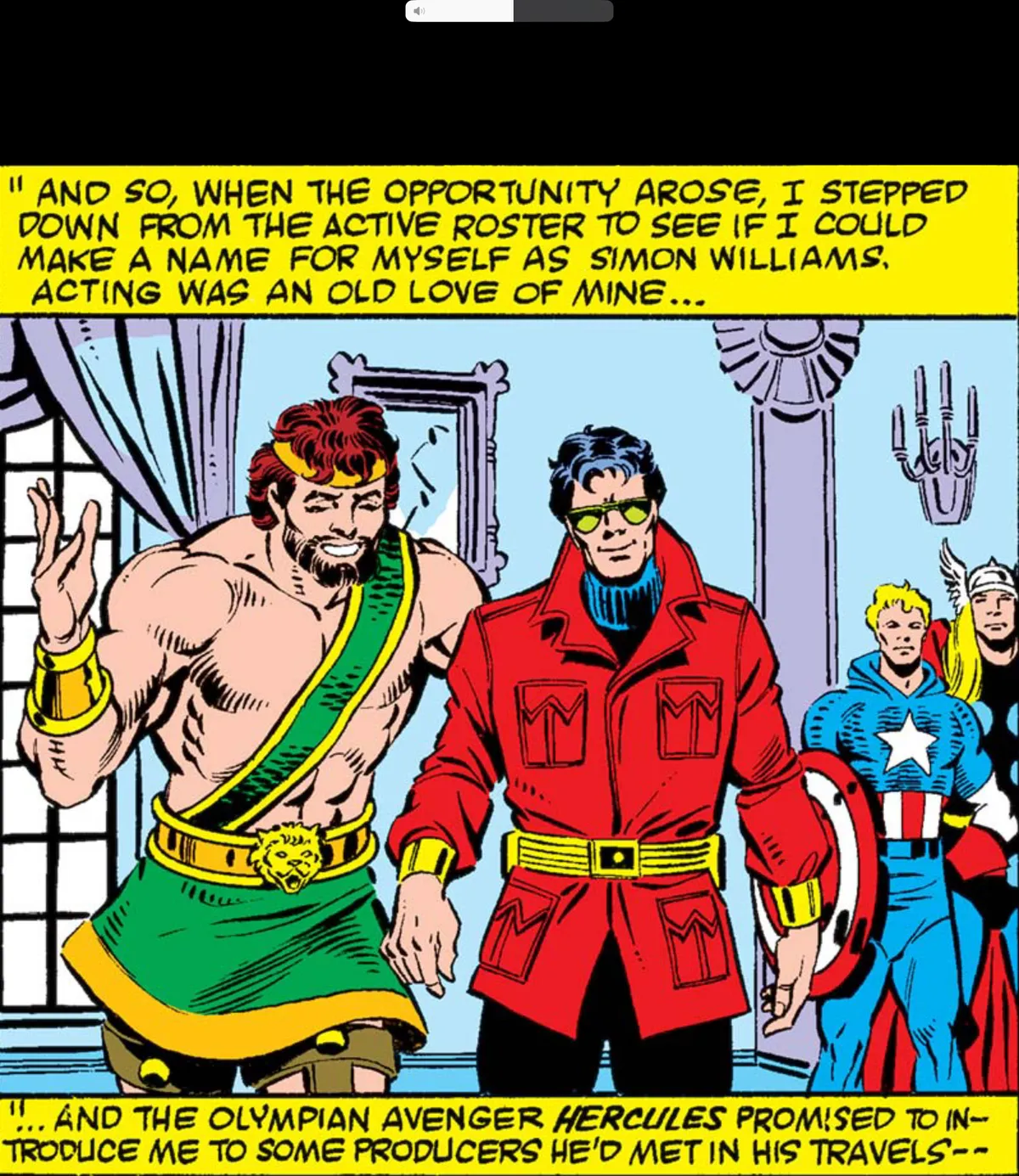
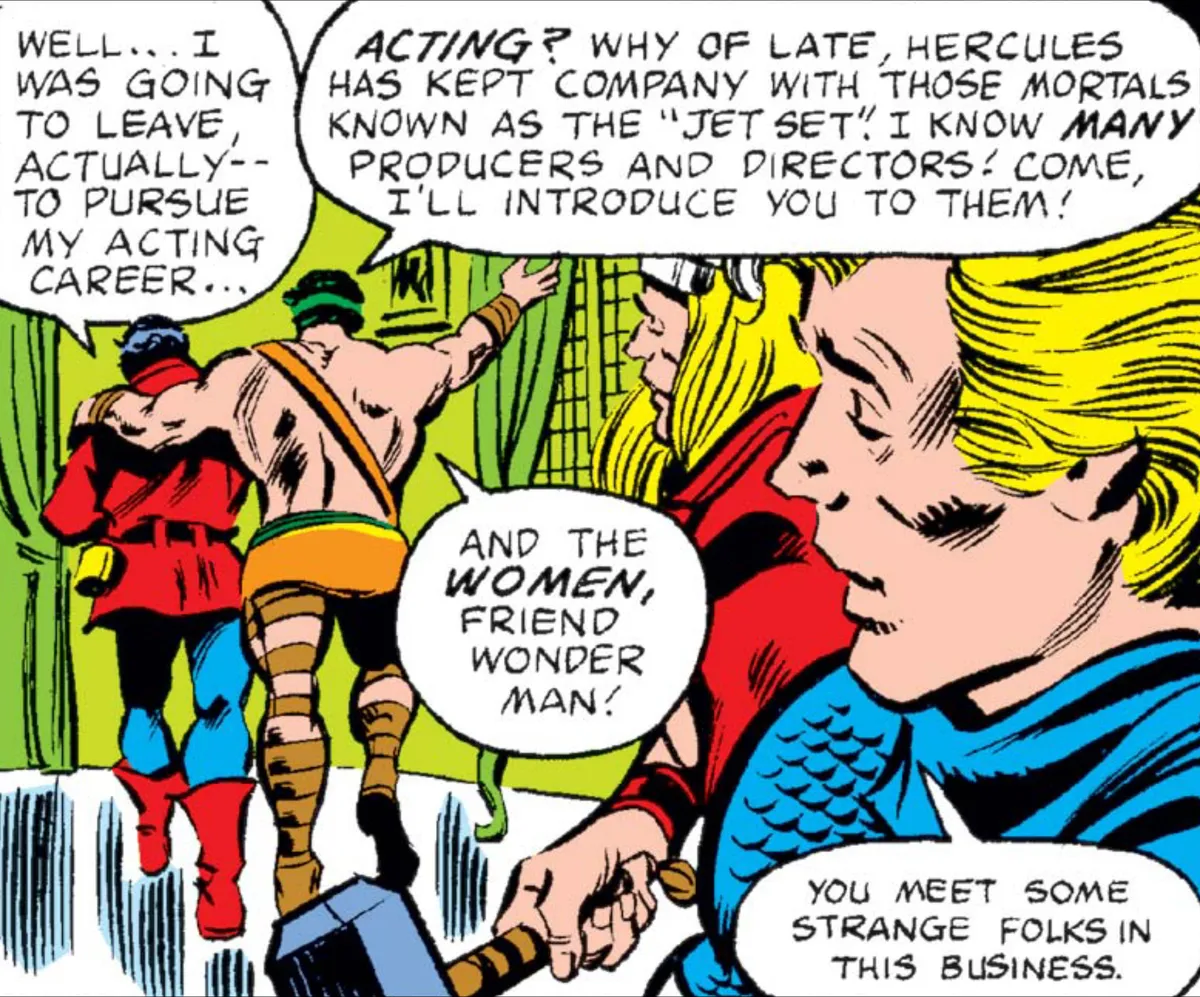
In the same issue, Captain America trims the active roster. Simon admits he never felt comfortable as a hero and steps down to act, and Hercules, who keeps company with the “jet set”, offers to introduce him to producers. “And the women, friend Wonder Man!”
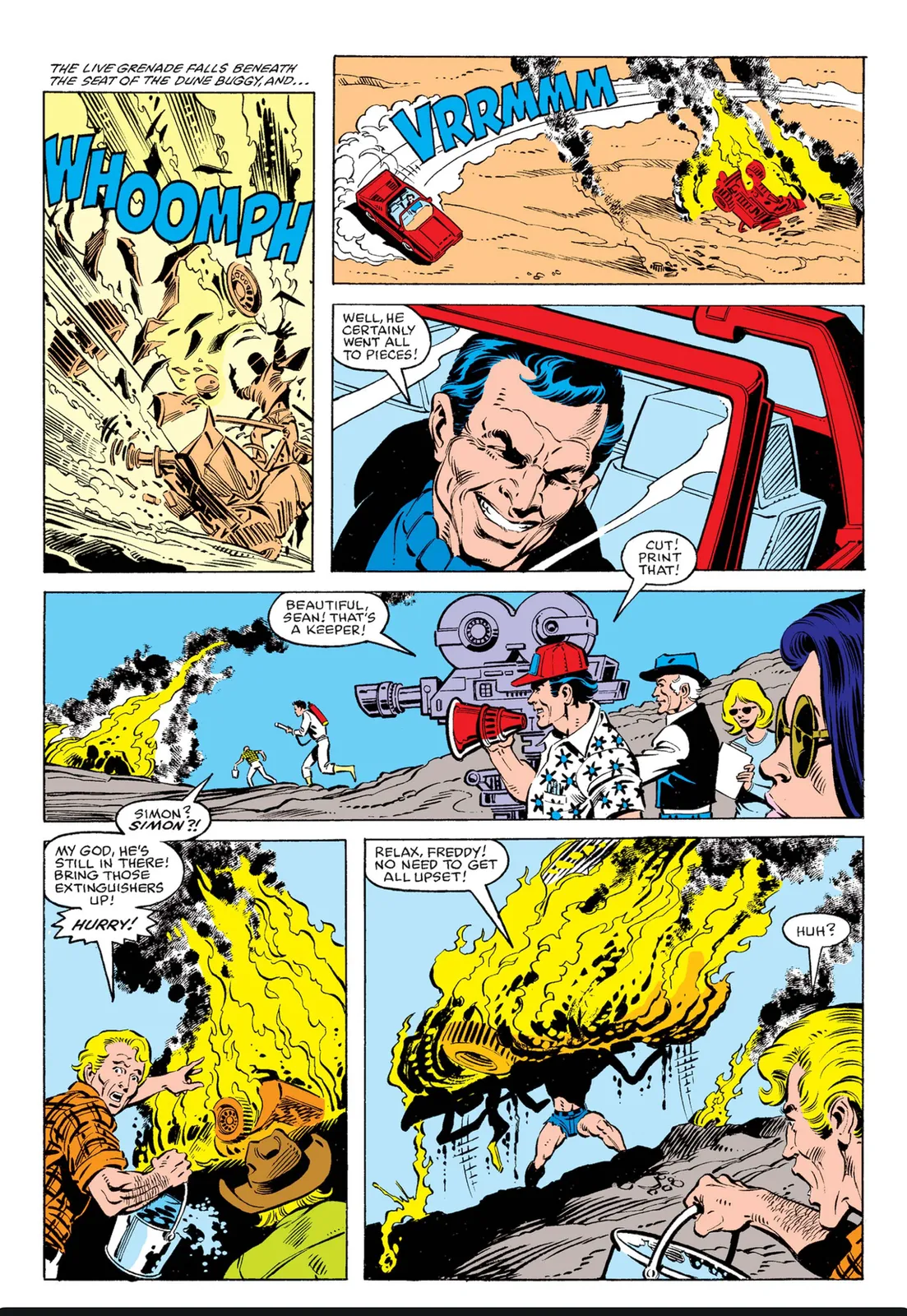
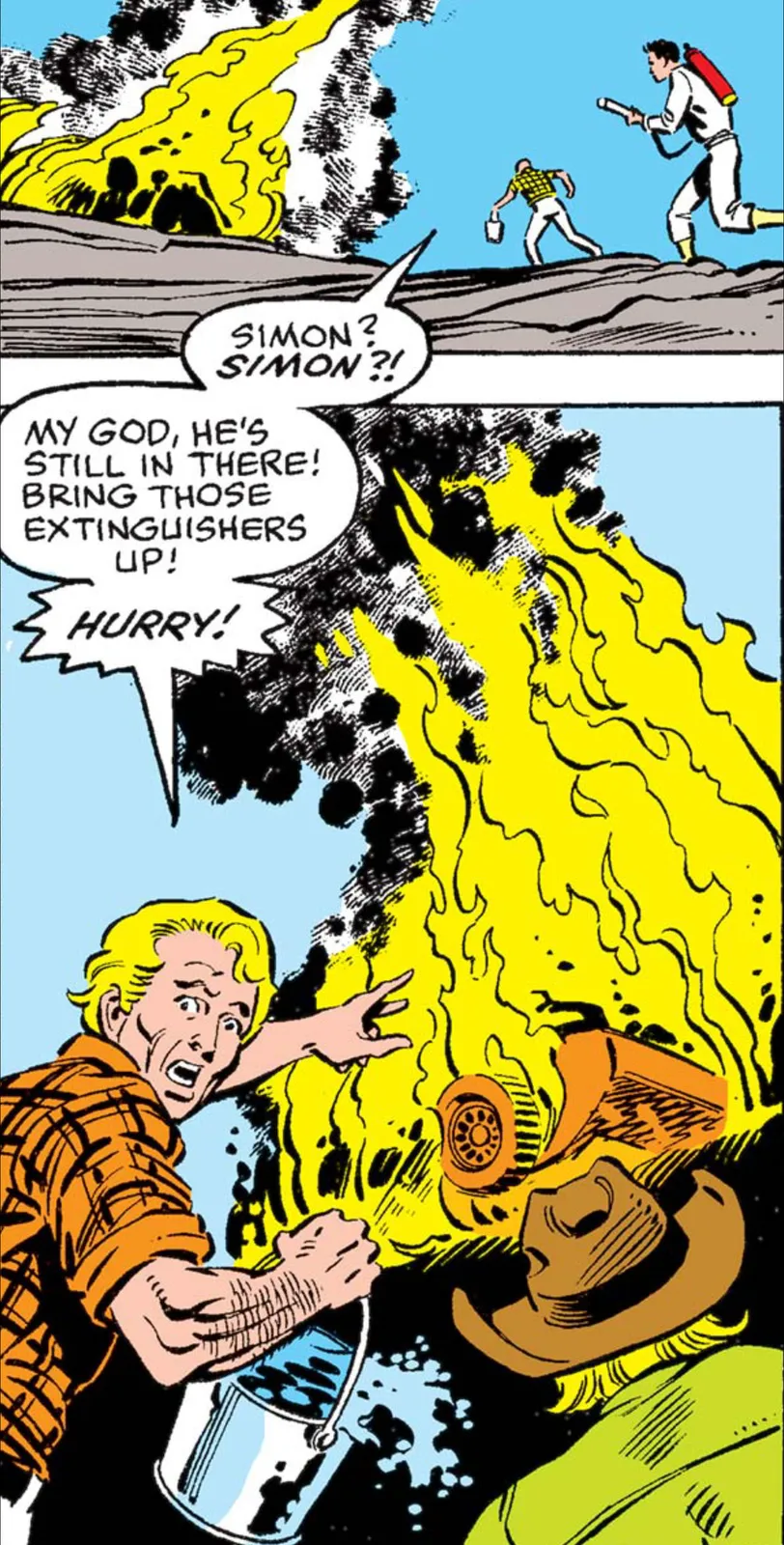
Simon starts as a stuntman, the perfect job for an indestructible man. In West Coast Avengers (1984) #1, a grenade blows up his car during a desert shoot. The crew panics, and Simon lifts the burning wreck over his head and throws it away: “Relax, Freddy! No need to get all upset!”
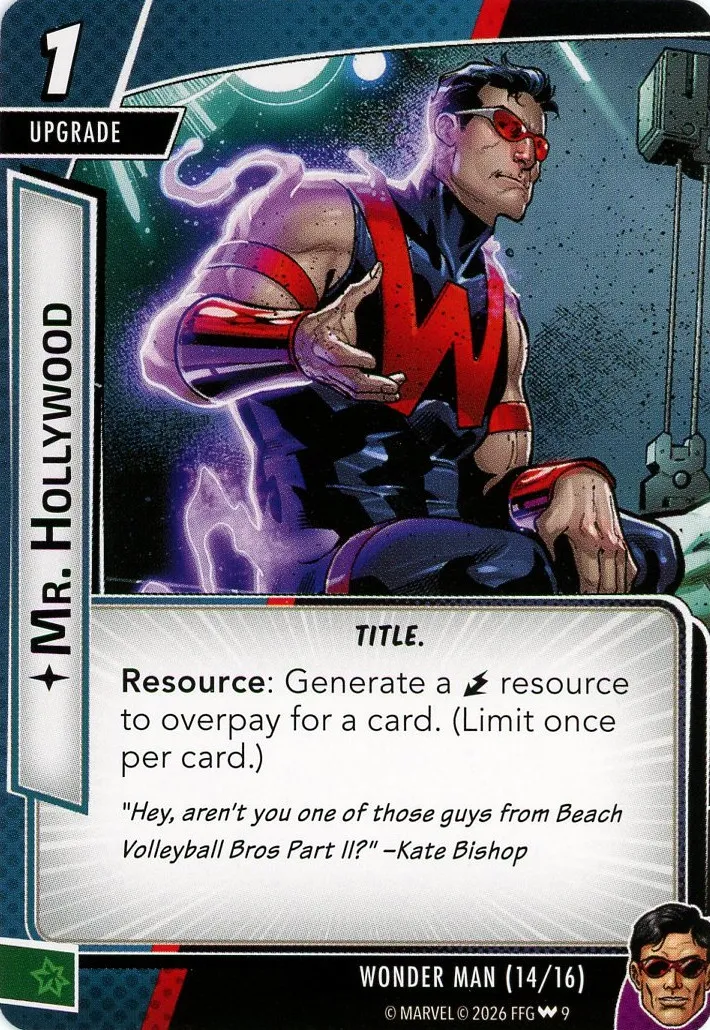
From stunts to stardom, he is Mister Hollywood. The flavor text of Mr. Hollywood is gold: Kate Bishop recognizing him from Beach Volleyball Bros Part II.
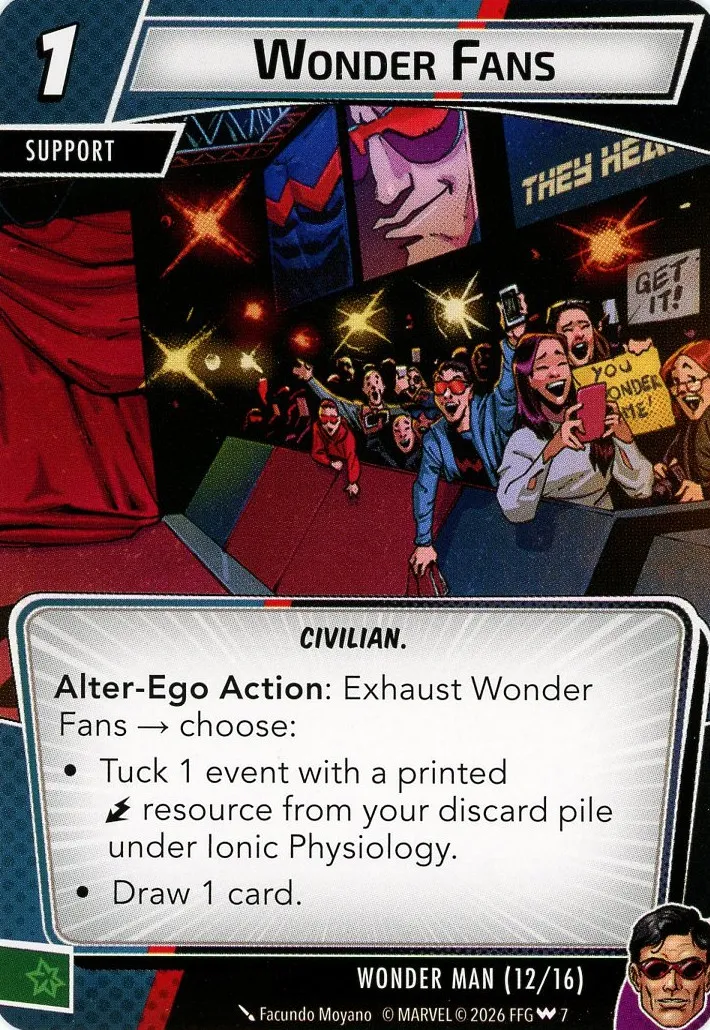
Wonder Fans pictures his red-carpet premieres. As any celebrity knows, fans help you recycle your old hits.
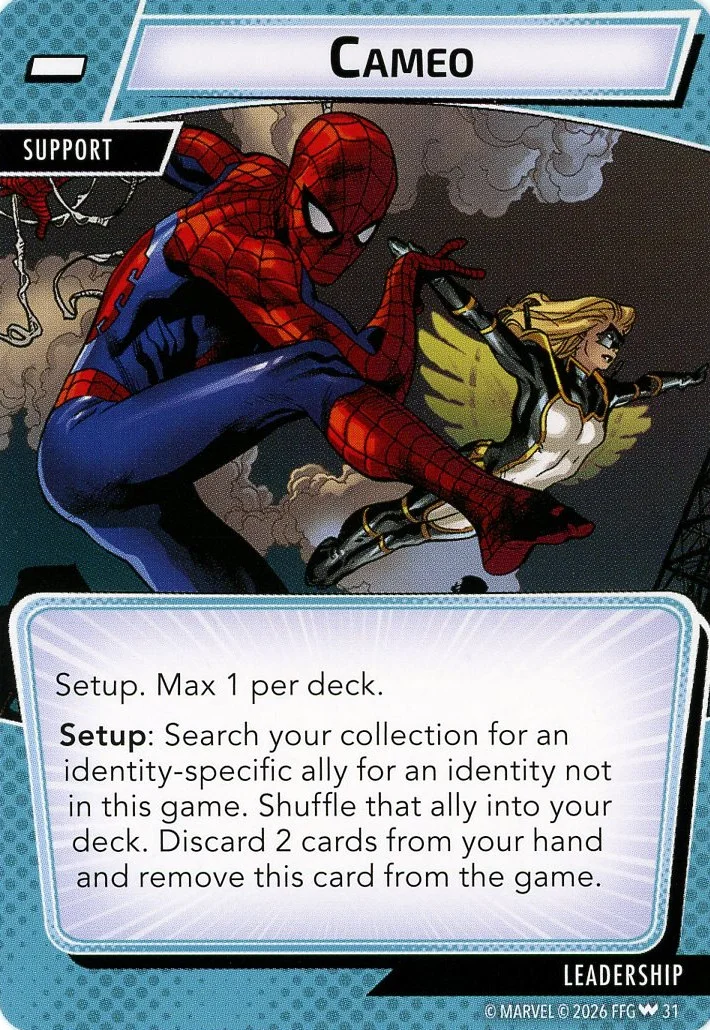
The Hollywood theme leaks into the aspect cards. Cameo lets a hero from another movie, er, pack, show up for a quick appearance. Simon did the same in West Coast Avengers (2024) #7, stopping by to confront a newcomer who stole his name.
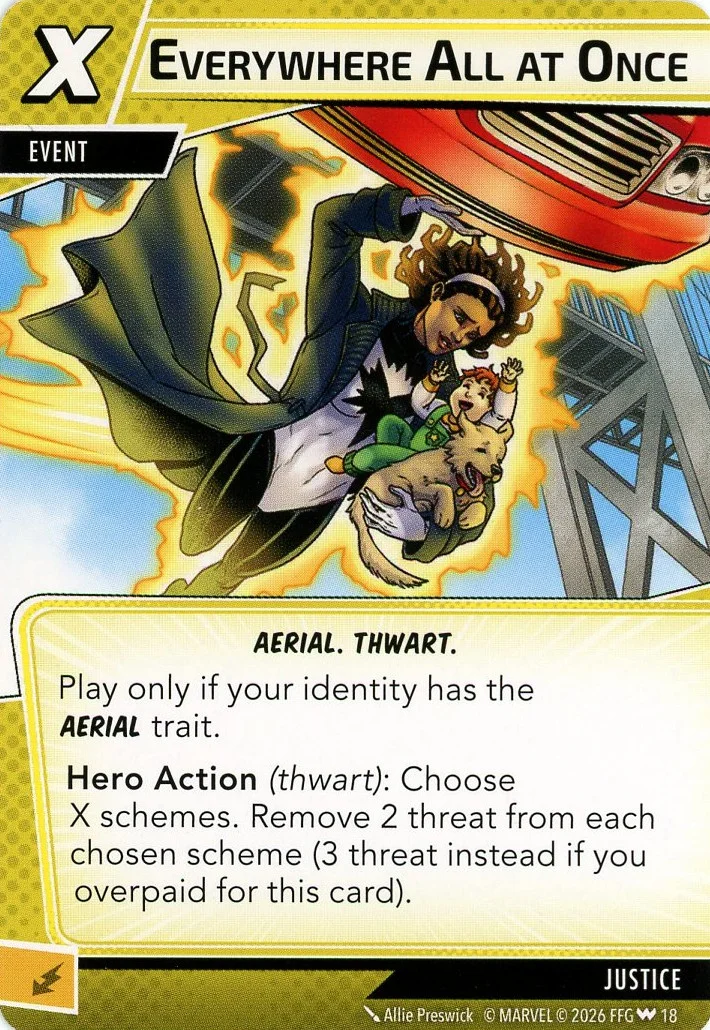
Everywhere All at Once is named after the film that swept the Oscars in 2023.
West Coast Avengers
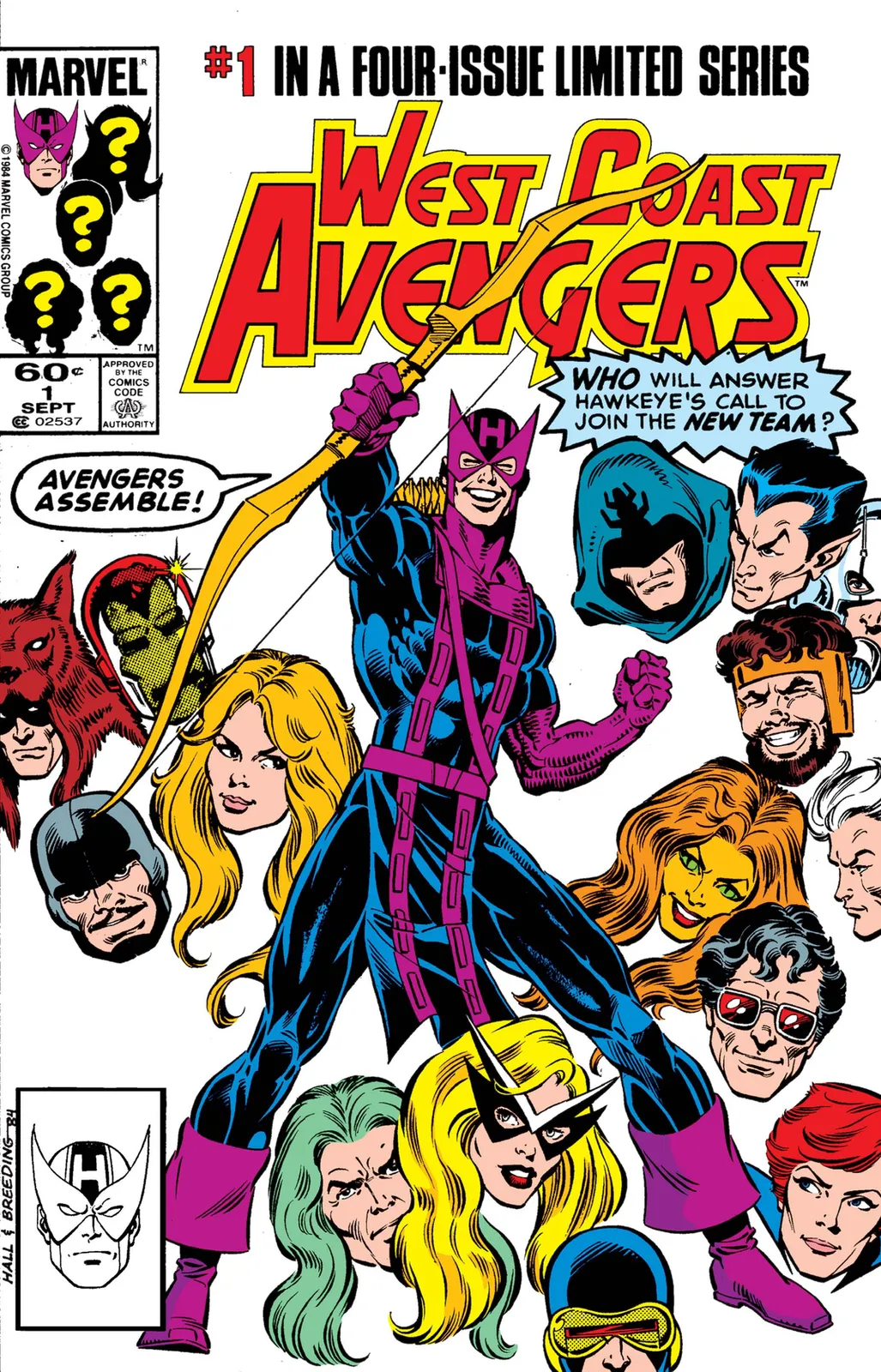
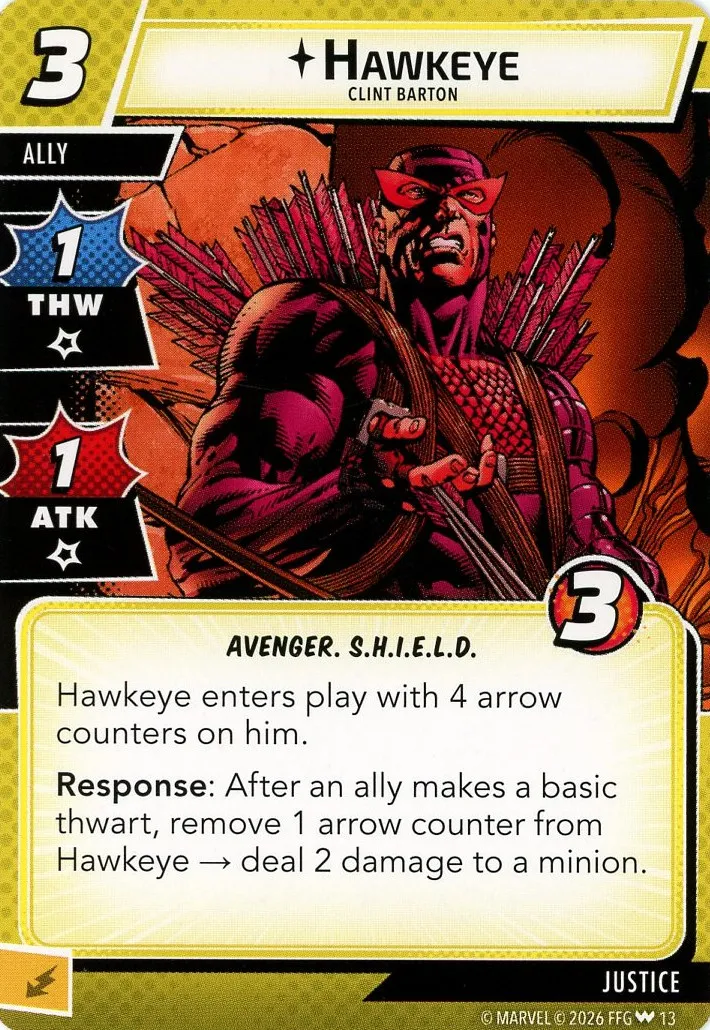
The West Coast Avengers are Simon’s real home. Hawkeye founds the team in Los Angeles in West Coast Avengers (1984) #1, with Mockingbird, Tigra, Iron Man (Jim Rhodes) and the local movie star. Hawkeye’s arrow counters echo his trick arrows, and his response after an ally thwarts sums up the team: a bunch of friends covering each other.
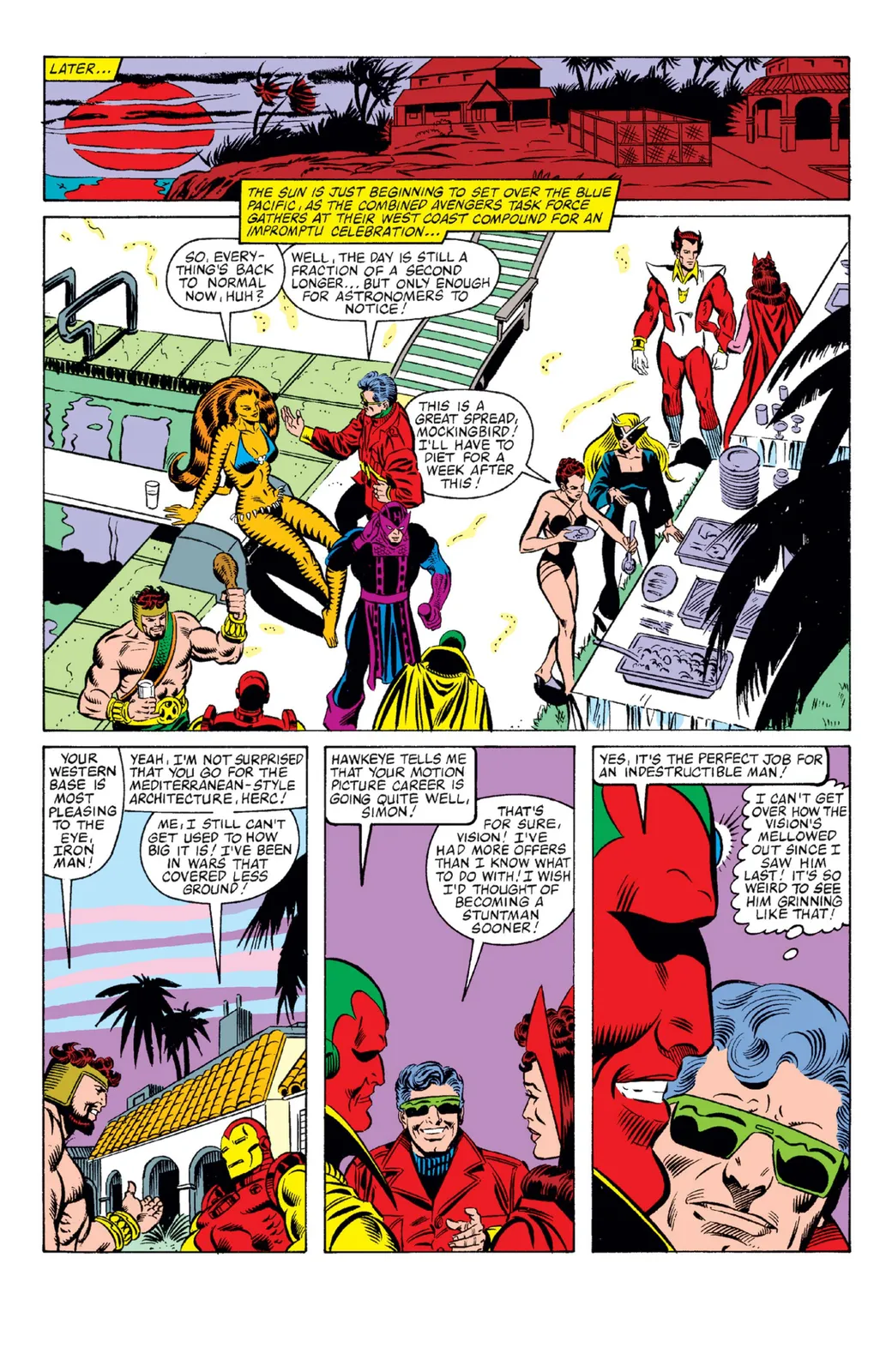
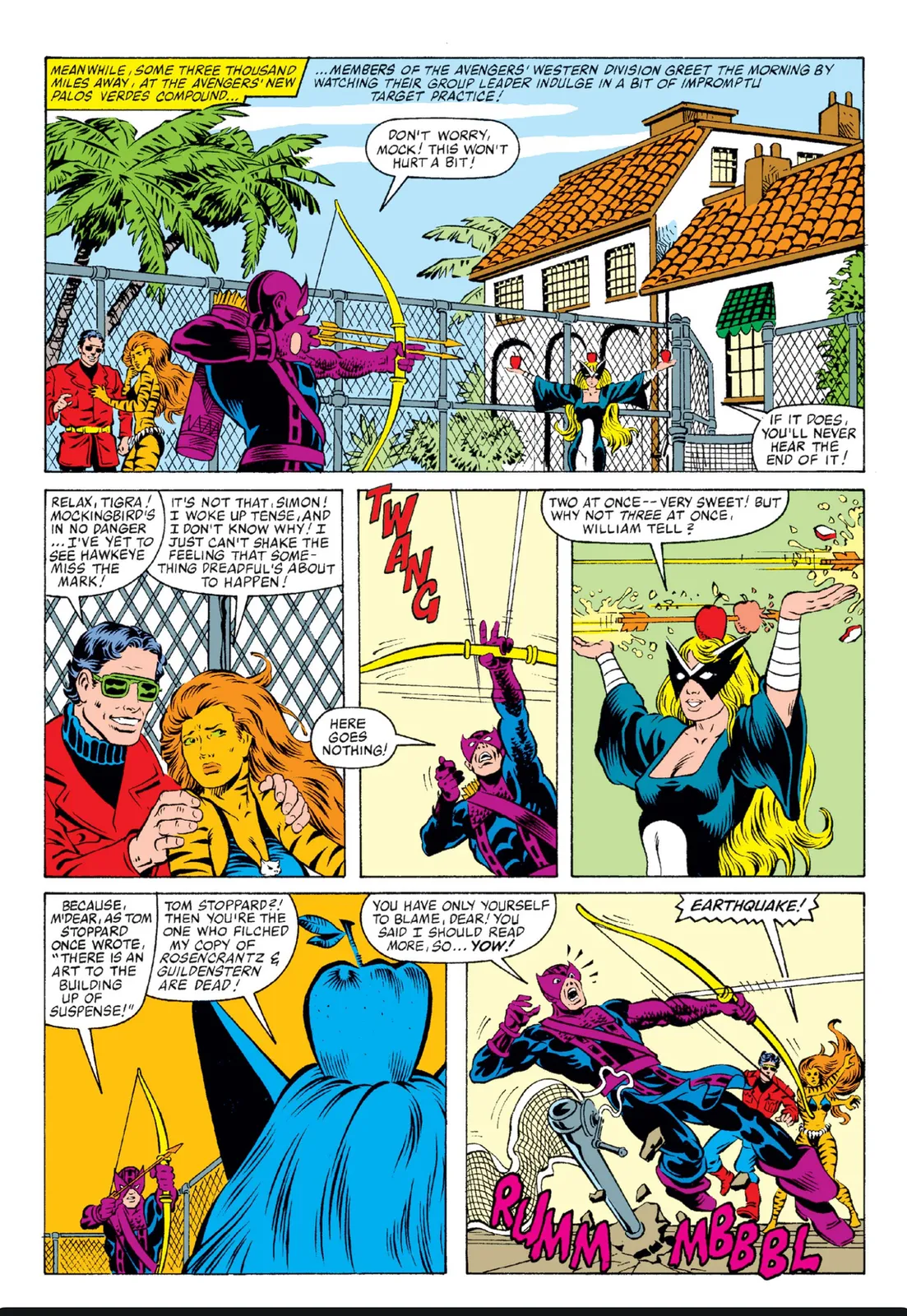
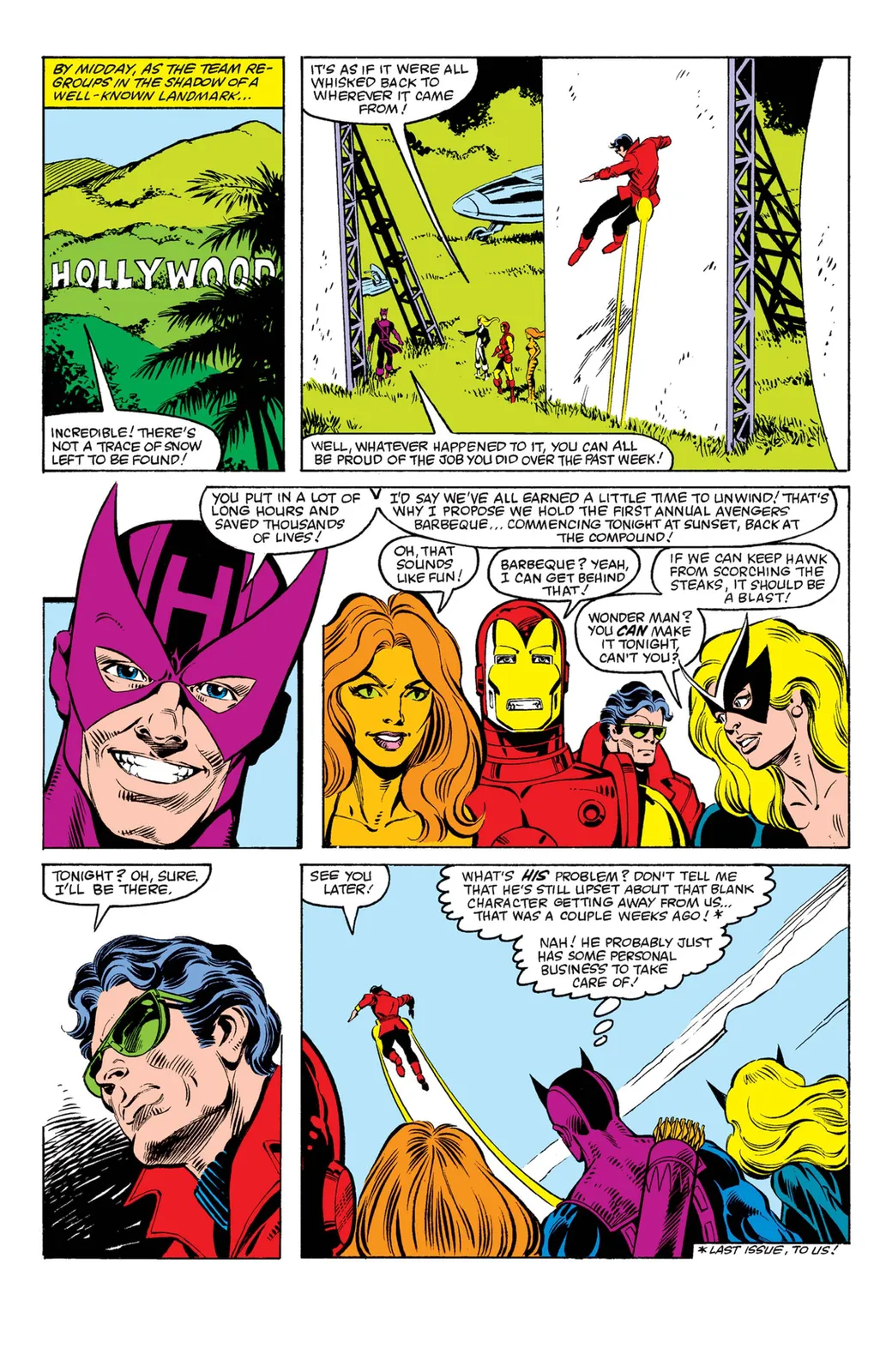
The 4-issue limited series is the light side of the Avengers: barbecues, target practice in the garden, and Simon flying past the Hollywood sign with his jet belt. The Vision even notes that stunts are “the perfect job for an indestructible man”.
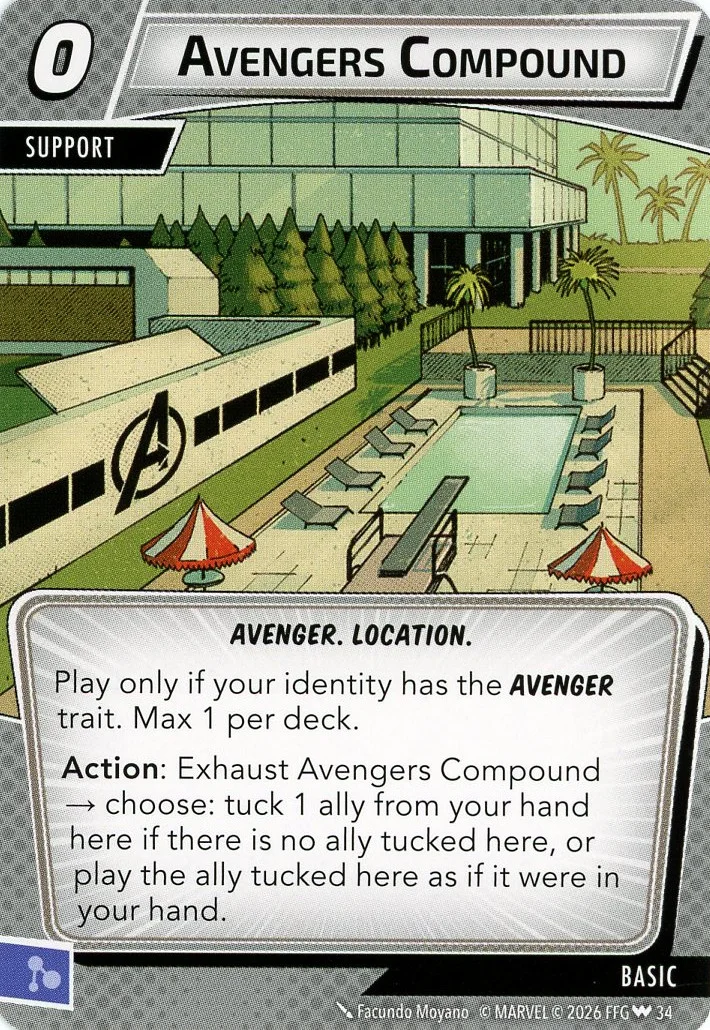
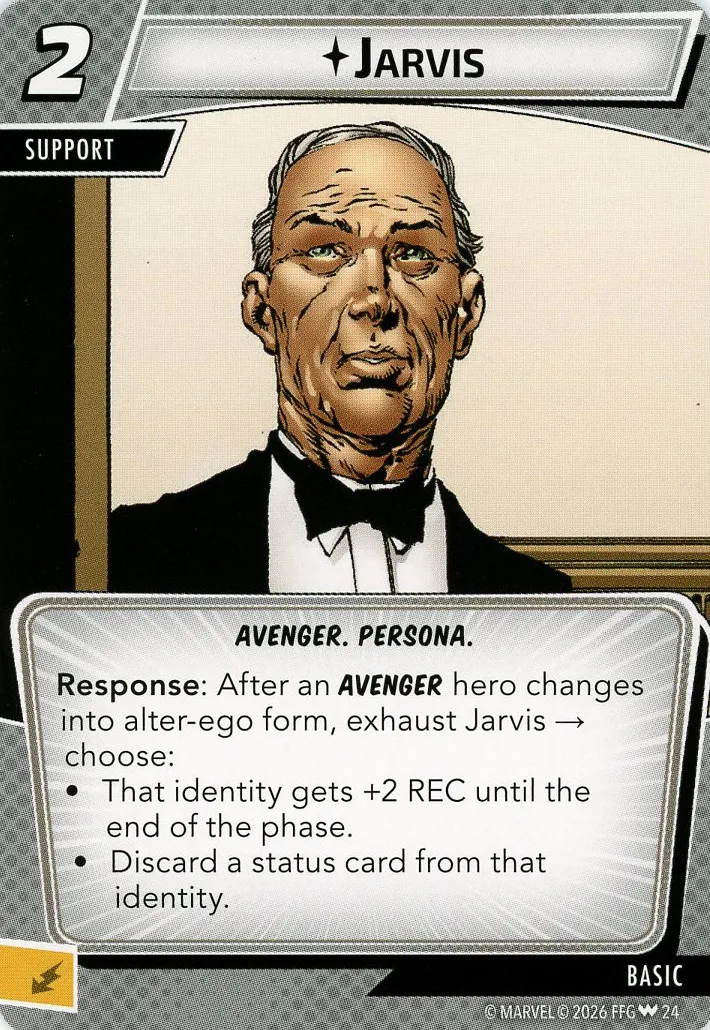
The pool and palm trees of the Avengers Compound match the West Coast team’s Palos Verdes compound.
Jarvis, the Avengers’ butler, welcomes heroes back home when they change into alter-ego. Simon still shares the base with him, and with Hercules, in Avengers Assemble (2024) #1.
Hank Pym

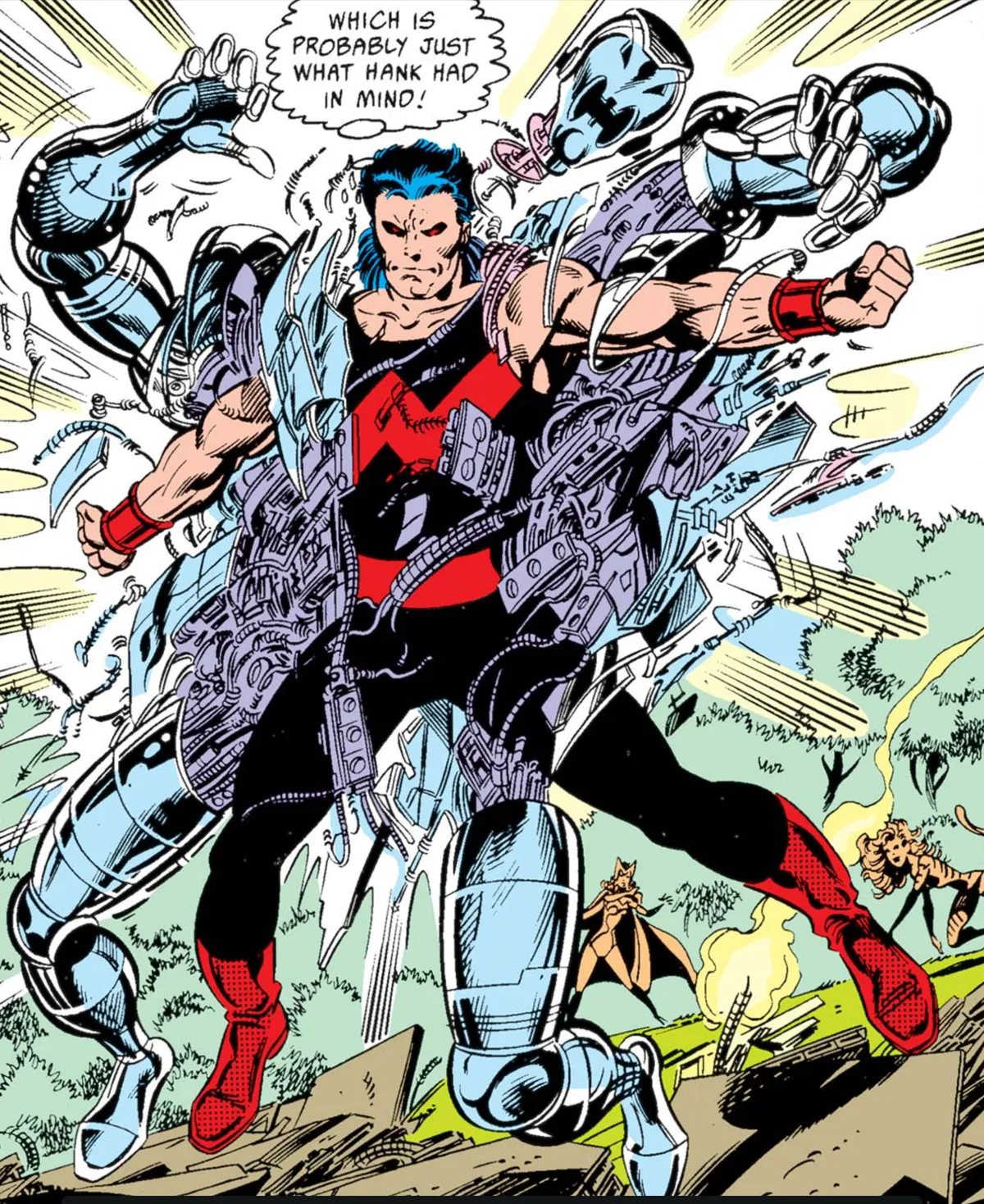
Hank Pym is woven through Simon’s whole life, and his Yellow Jacket ally ships in this wave, in the Civil War box. Hank recorded Simon’s brain patterns, built the Ultron that turned them into the Vision, and later became the West Coast Avengers’ resident scientist. In their ongoing series (West Coast Avengers (1985) #1 onward), Ultron and the Grim Reaper capture Hank and Simon together, and Simon ends up tearing Ultron apart with his bare hands.
Tigra completes the triangle. In the same series, she dates Hank and Simon at the same time. Hank and Tigra’s story goes much further, up to a son, which I covered in the Tigra article.
Pacifism
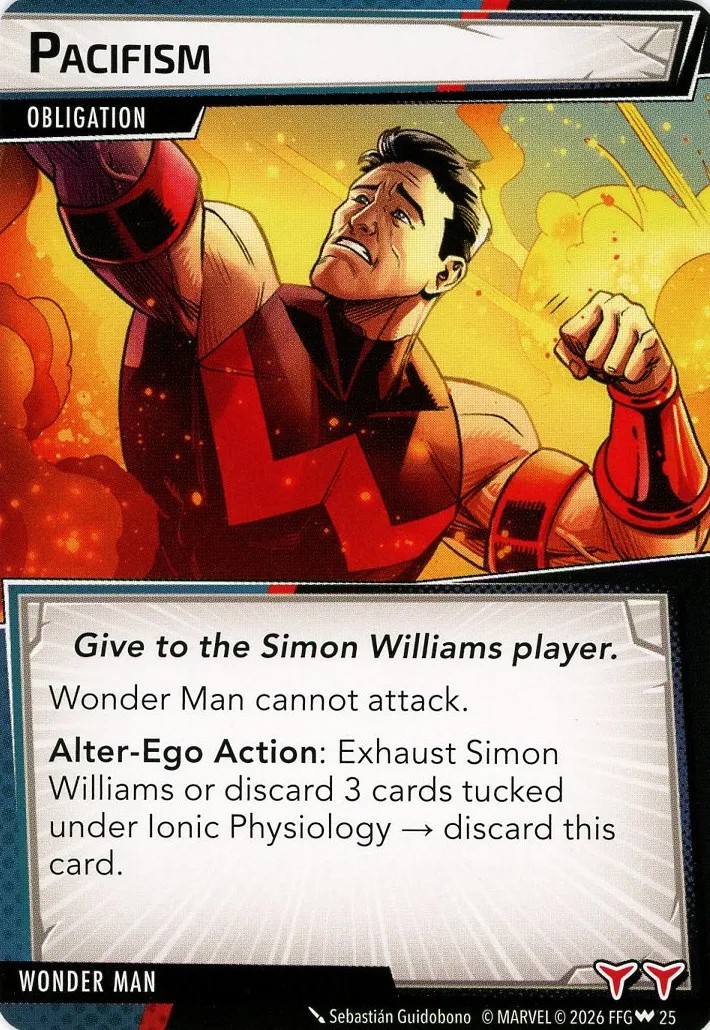
The obligation Pacifism is late-era Simon. First he turns against the Avengers, convinced they do more harm than good, and leads the Revengers against them (New Avengers Annual (2011) #1, Avengers Annual (2012) #1). Then he joins Captain America’s Unity Division despite a newfound commitment to pacifism (Uncanny Avengers (2012) #5). In the game, Wonder Man simply cannot attack.
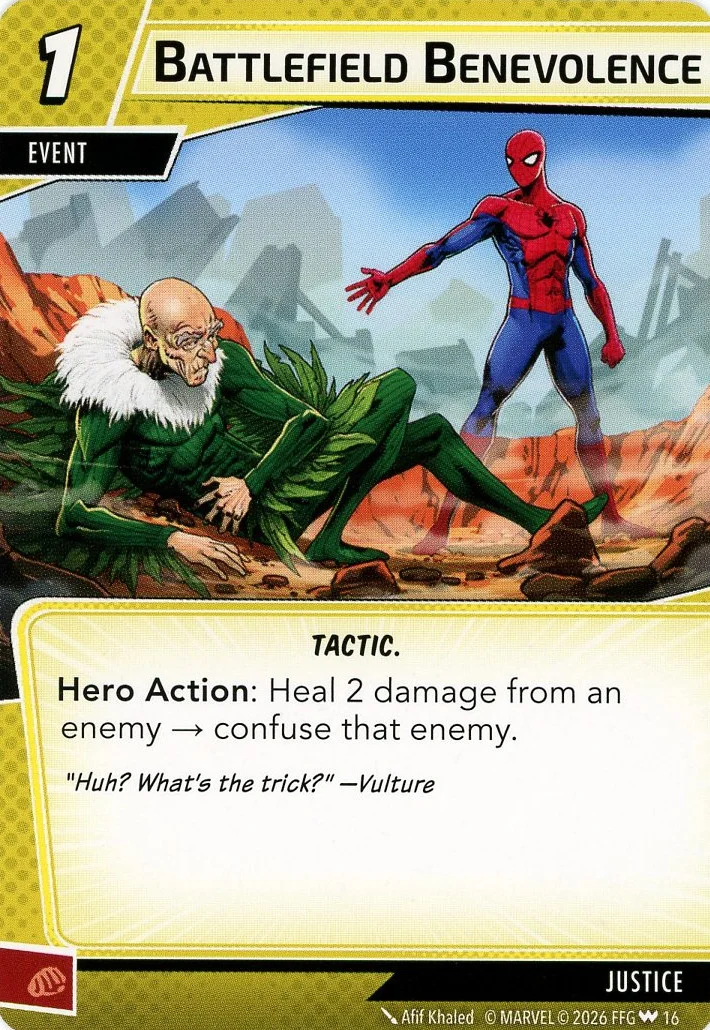
Battlefield Benevolence carries the same spirit: heal an enemy to confuse it. “Huh? What’s the trick?”
Scarlet Witch
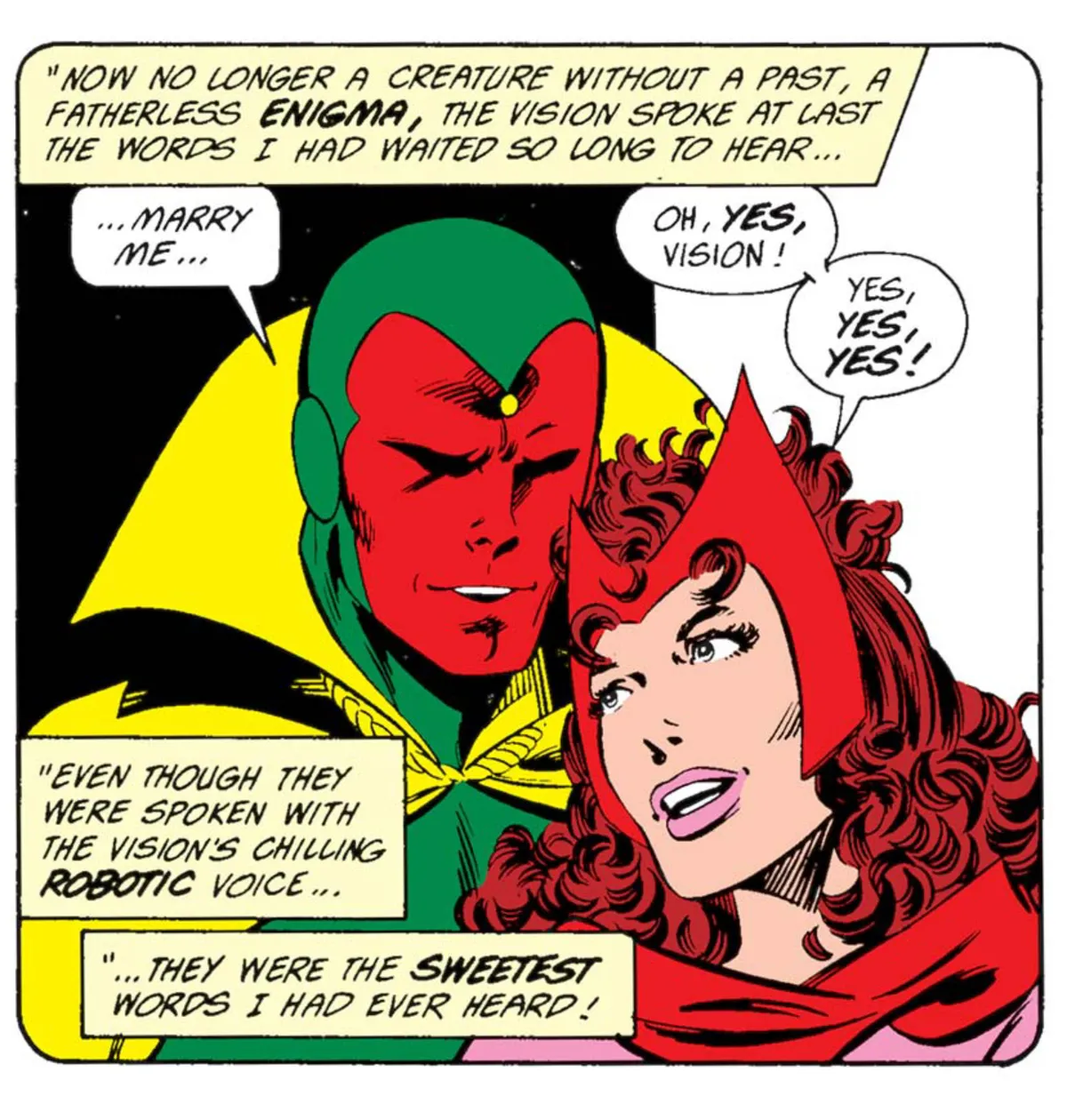
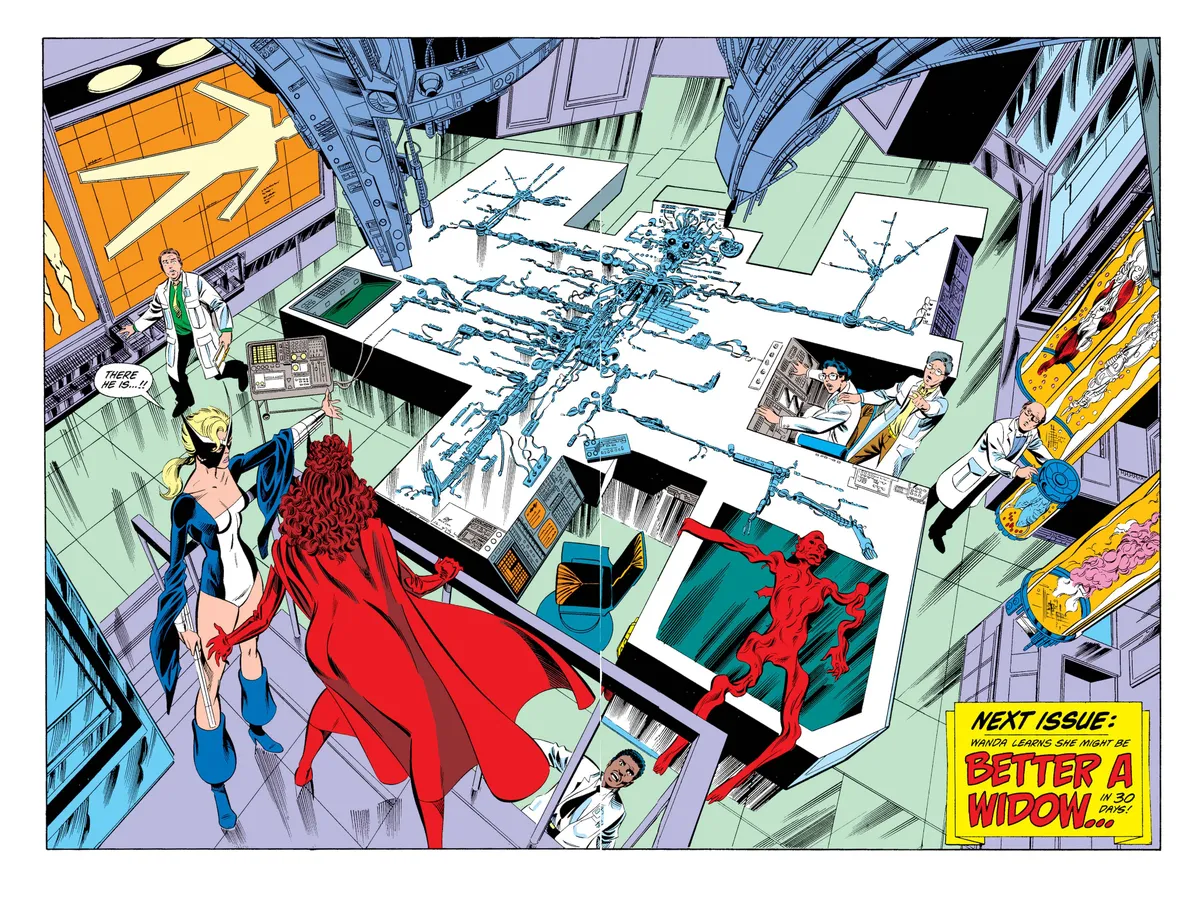
The brain patterns put Simon between the Vision and the Scarlet Witch. In “Vision Quest” (West Coast Avengers (1985) #42 to #45), the Vision is kidnapped and dismantled. Hank Pym can rebuild him, but he needs Simon’s brain patterns to restore his personality.
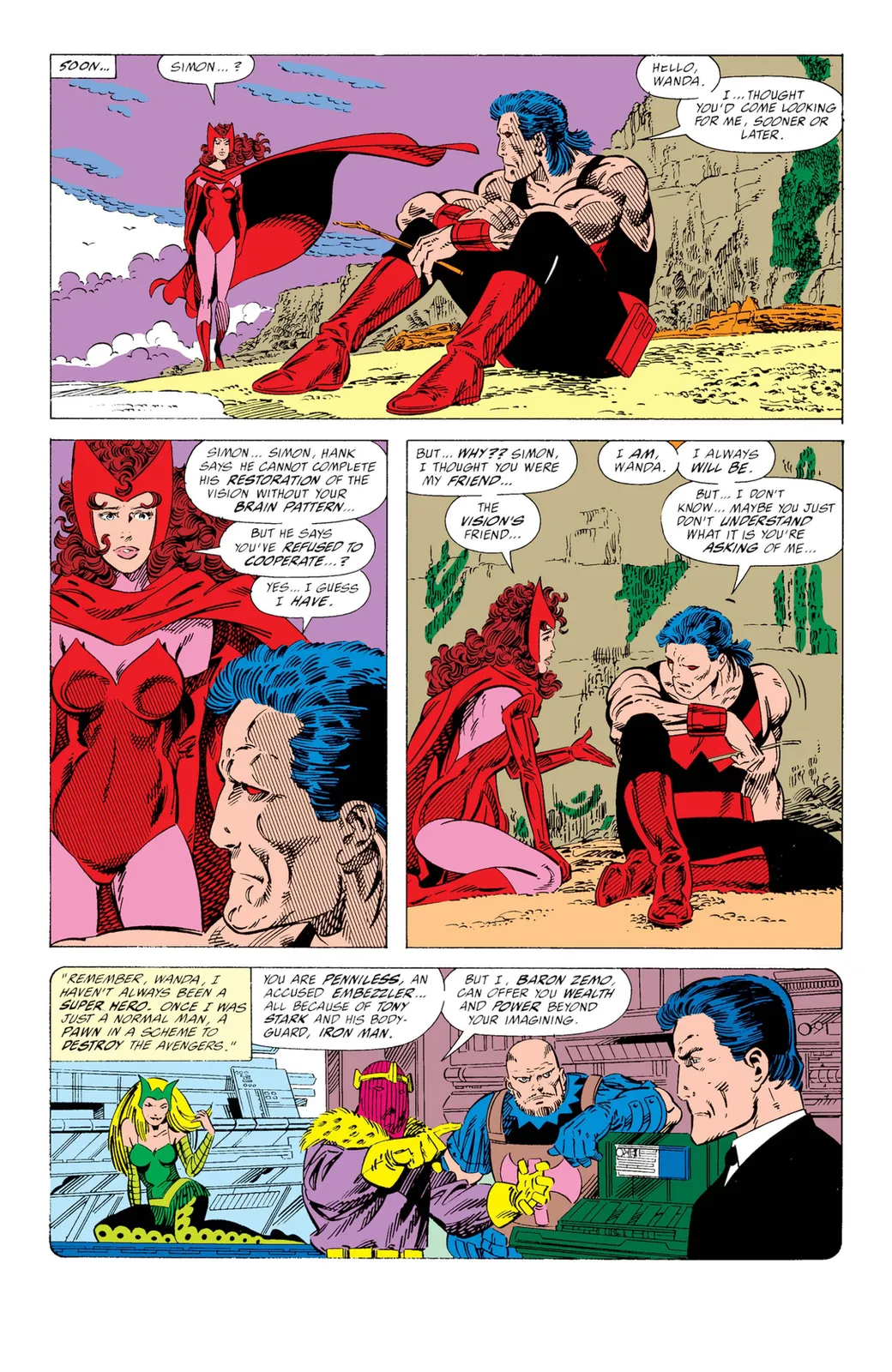
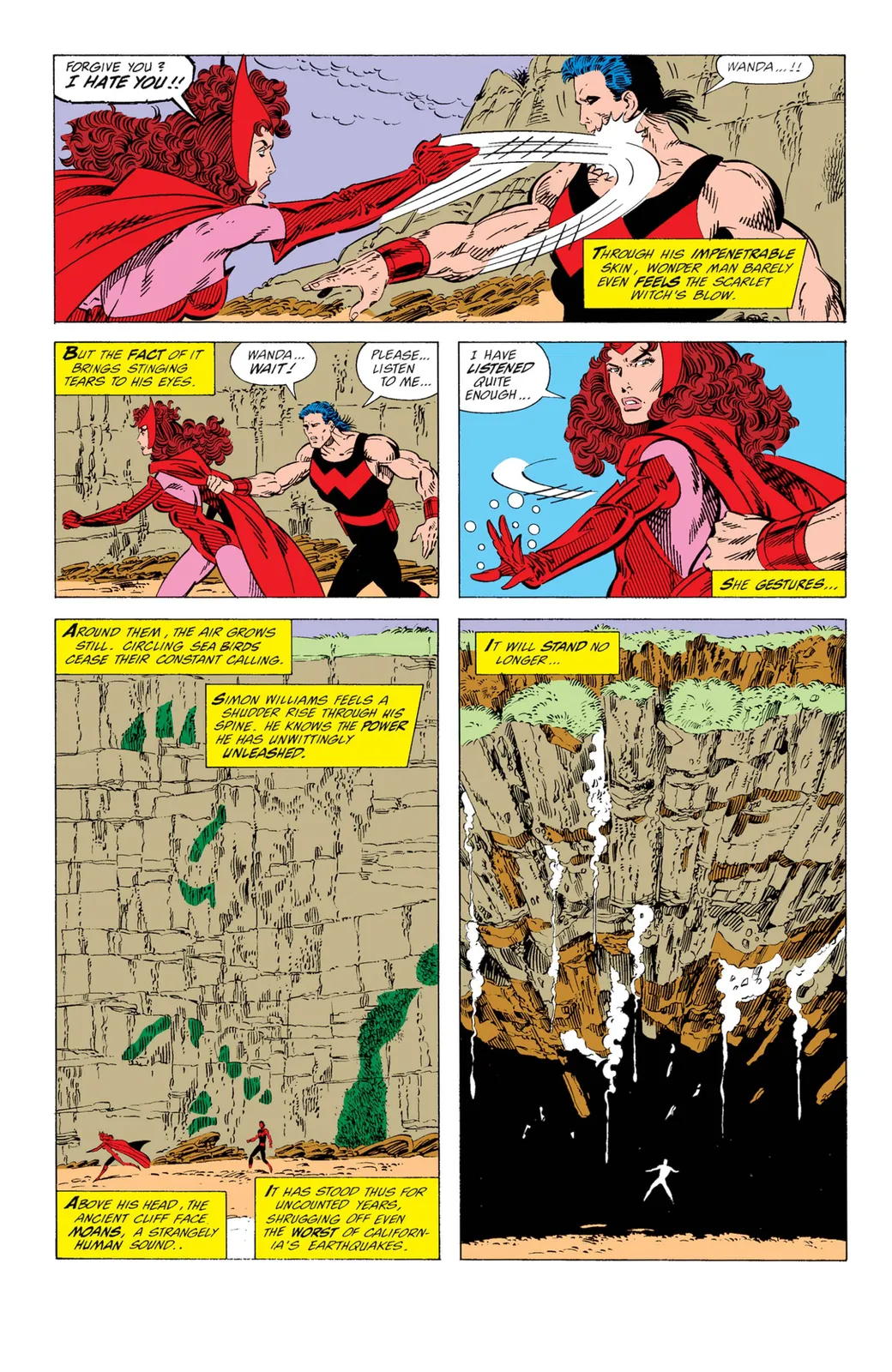
Simon refuses. Copying his mind the first time, without his consent, felt like having his soul ripped out. And he has feelings for Wanda: the Wasp even suggests that the Vision’s love for Wanda came from Simon’s patterns in the first place. “Forgive you? I hate you!” The Vision comes back white and emotionless.
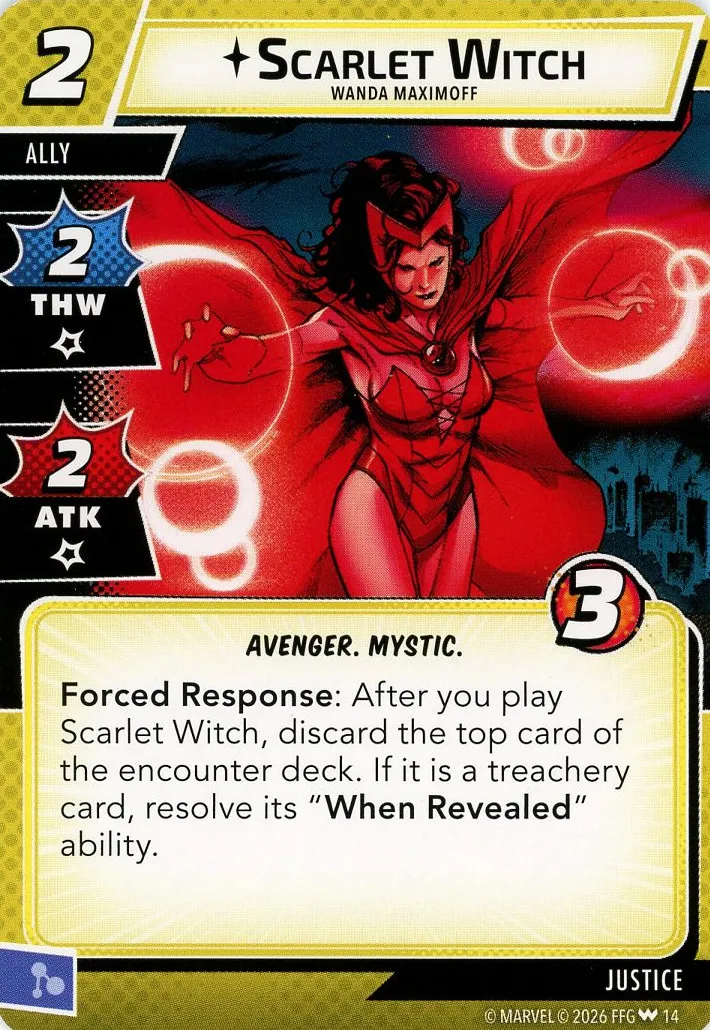
The love story finally happens in Busiek’s Avengers, where Wanda brings Simon back to life. Her ally card plays on her probability magic: you gamble on the top of the encounter deck, and it may or may not blow up in your face.
Firebird
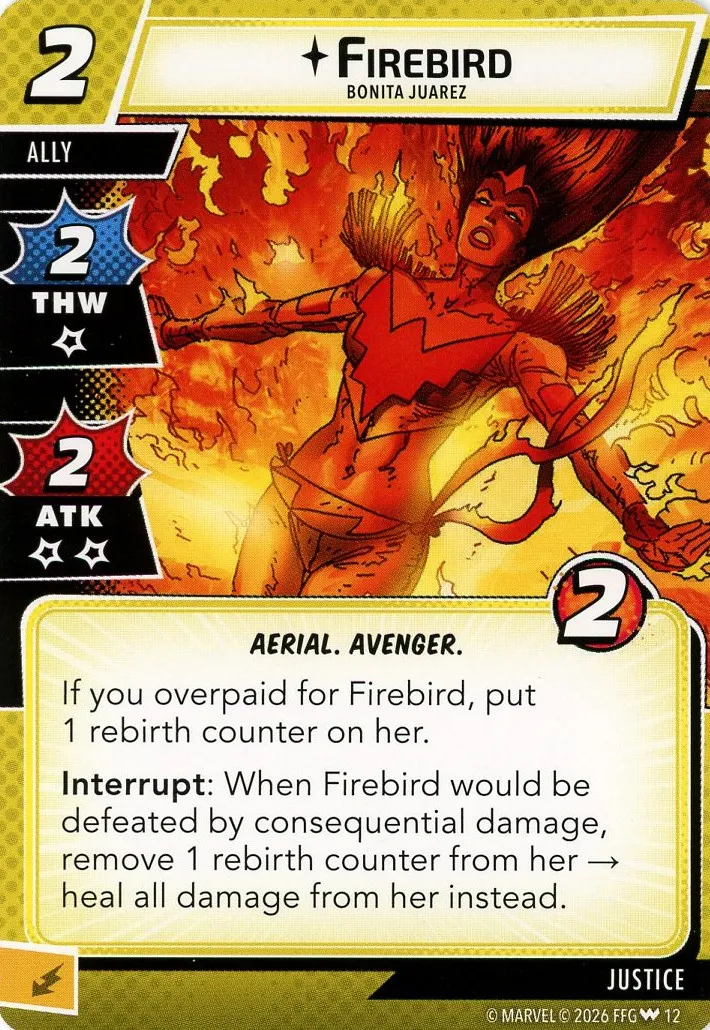
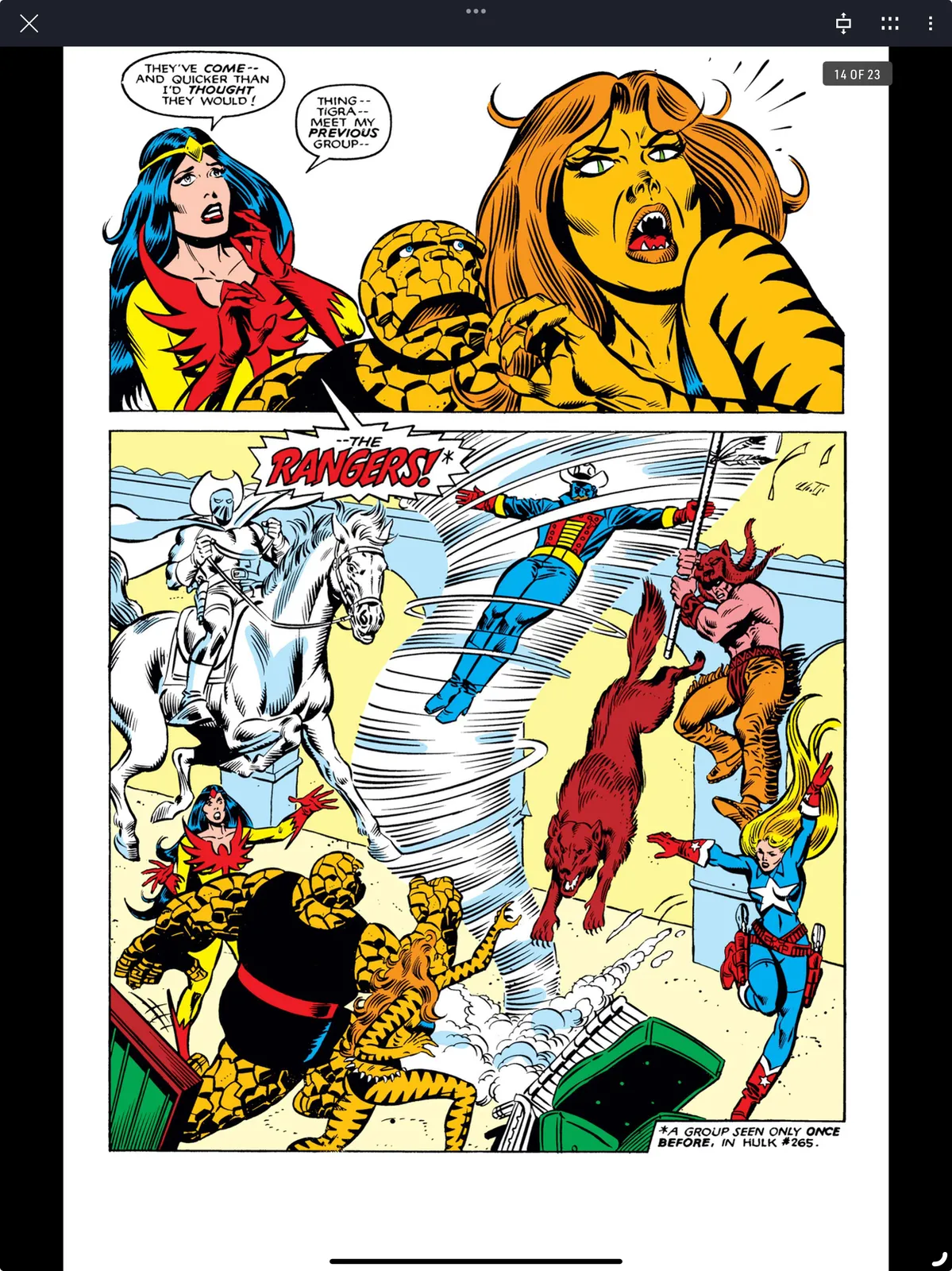
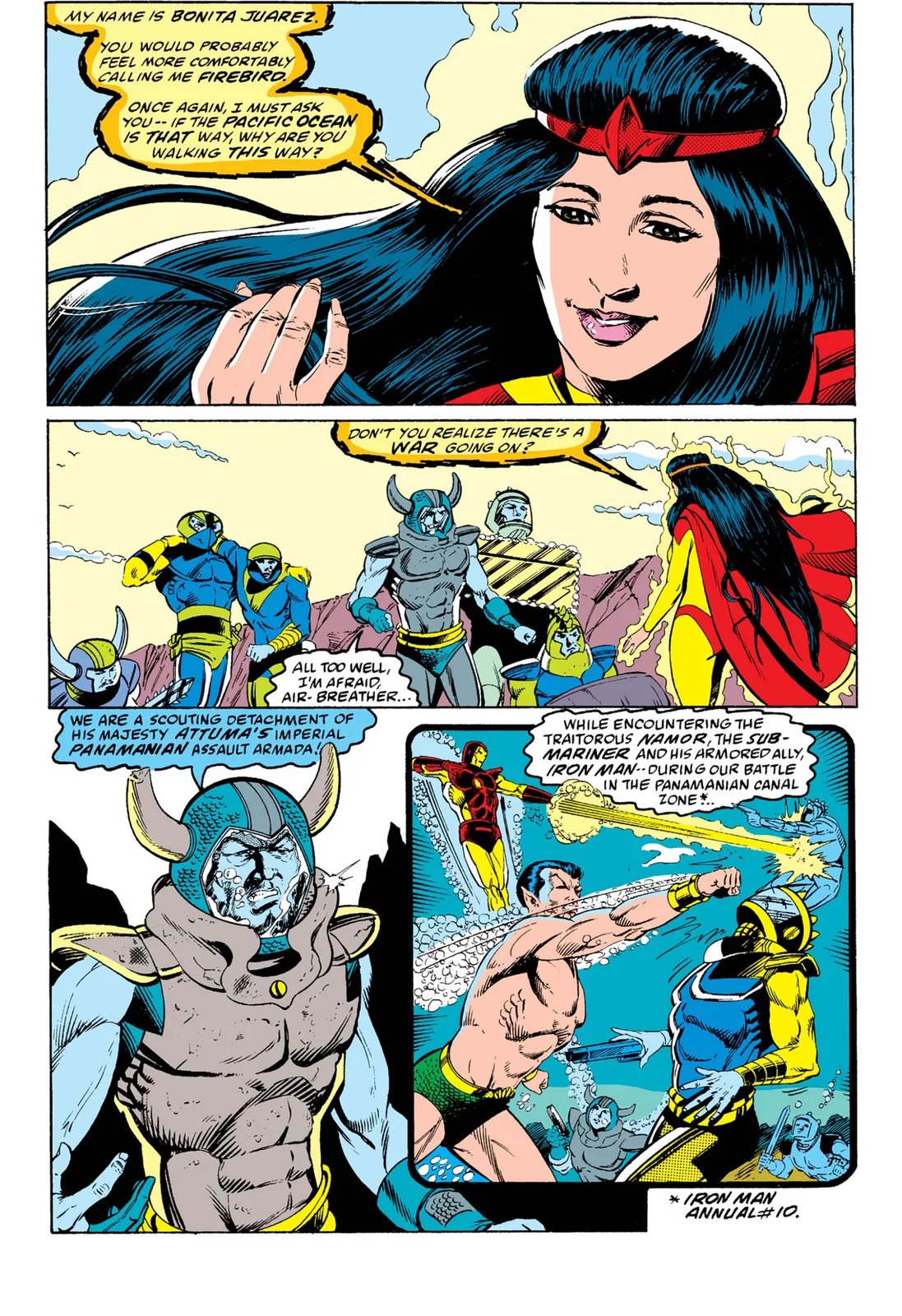
Firebird has no story of her own with Simon: the West Coast Avengers are their only link. Bonita Juarez debuts with the Rangers in Incredible Hulk (1962) #265. Mockingbird wants her on the West Coast team, but Hawkeye would rather court a more famous applicant, the Thing, so she leaves without joining. She comes back just in time to stop Hank Pym’s suicide attempt, and ends up a reserve Avenger.
The rebirth counter has a source. A firebird, like the phoenix, rises from its ashes, and in Busiek’s Avengers, the run that brought Simon back, Firebird and Thor are the only Avengers to shrug off a radiation blast, on account of their immortality (Avengers (1998) #43).
Reformed villains
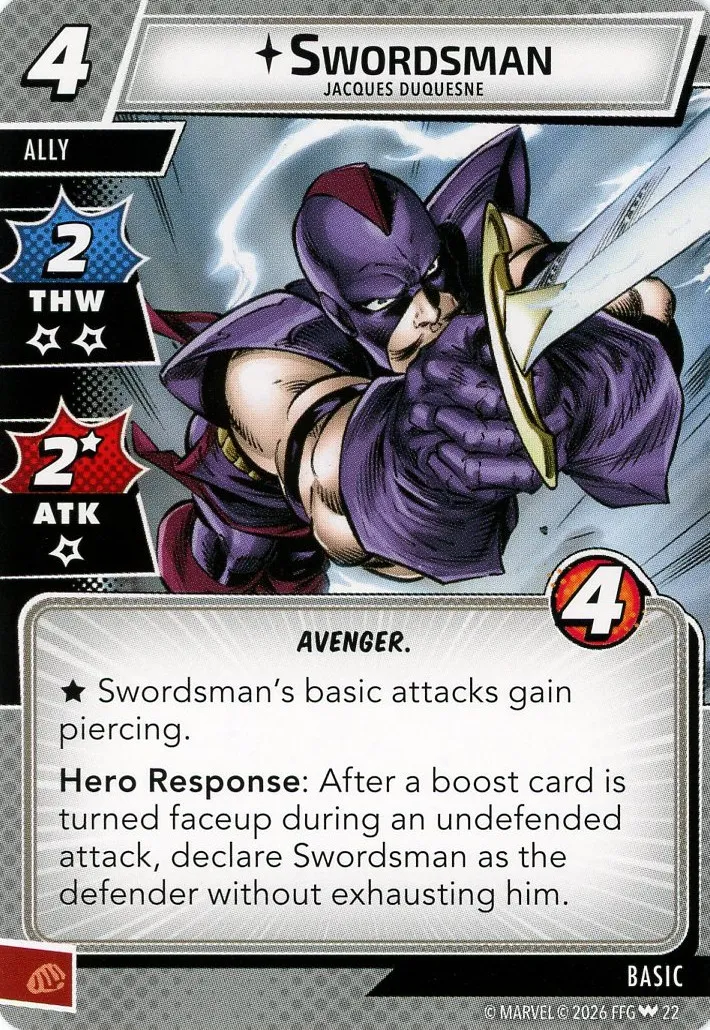
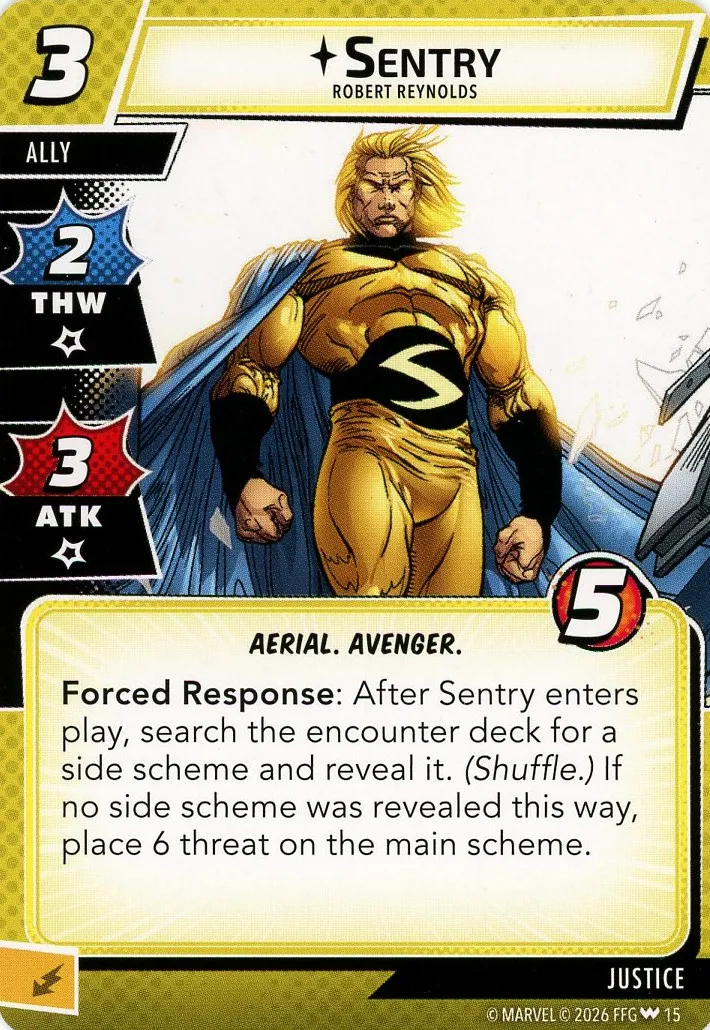
This pack is a support group for reformed villains. Simon started as Zemo’s double agent. Hawkeye debuted on the wrong side of the law, fighting Iron Man for the Black Widow (Tales of Suspense (1959) #57). The Scarlet Witch debuted in Magneto’s Brotherhood of Evil Mutants (X-Men (1963) #4). Both joined the Avengers together in Avengers (1963) #16, the issue that proved the team would take second chances.
Swordsman completes the club. He debuts as a villain in Avengers (1963) #19, and he is also Hawkeye’s old mentor. He turns Avenger later, like his pupil. Piercing for a blade is on point. That makes 3 allies out of 5, plus the hero. The nemesis is the brother who never reformed.
Sentry is the exception: a hero whose villain lives inside him. He and Simon served together in the post-Civil War Mighty Avengers (The Mighty Avengers (2007) #1). Bob Reynolds has the power of a million exploding suns, and a dark side, the Void, that brings trouble along. Reveal a side scheme, or put 6 threat on the main scheme: this hero comes with baggage.
Grim Reaper
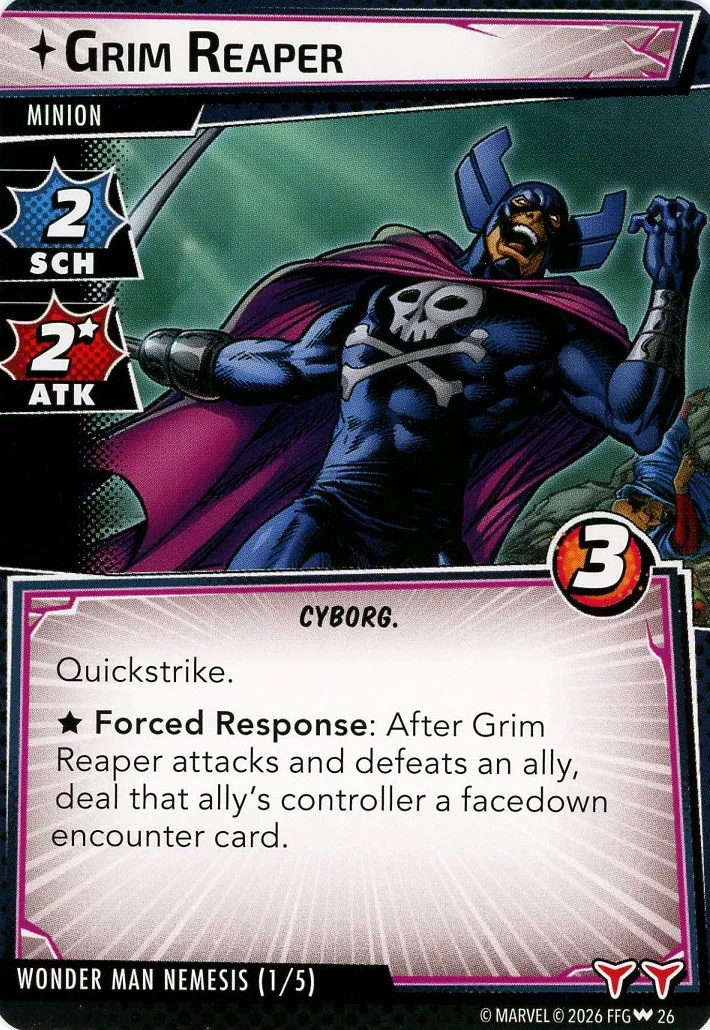
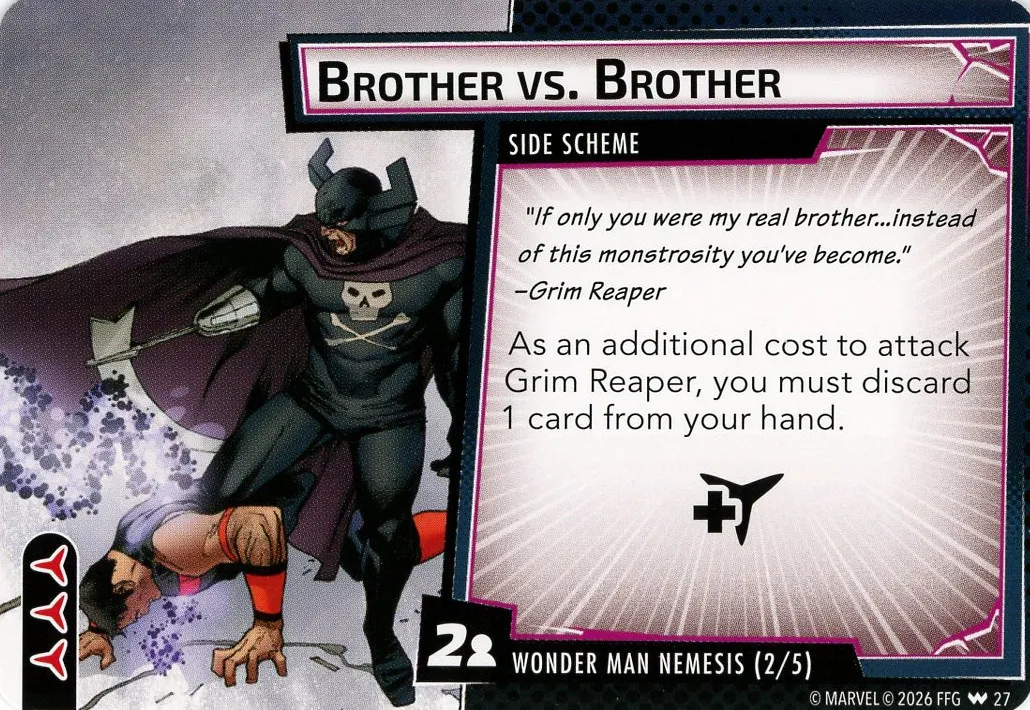
Eric Williams loves his brother and hates what he became. He blames the Avengers for Simon’s death and becomes the Grim Reaper in Avengers (1963) #52, with a scythe in place of his right hand (the game reads it as Cyborg). He even offers the Vision a place in Simon’s preserved body (#102), and puts both “brothers” on trial in #160. The flavor text of Brother vs. Brother says it all: “If only you were my real brother… instead of this monstrosity you’ve become.”
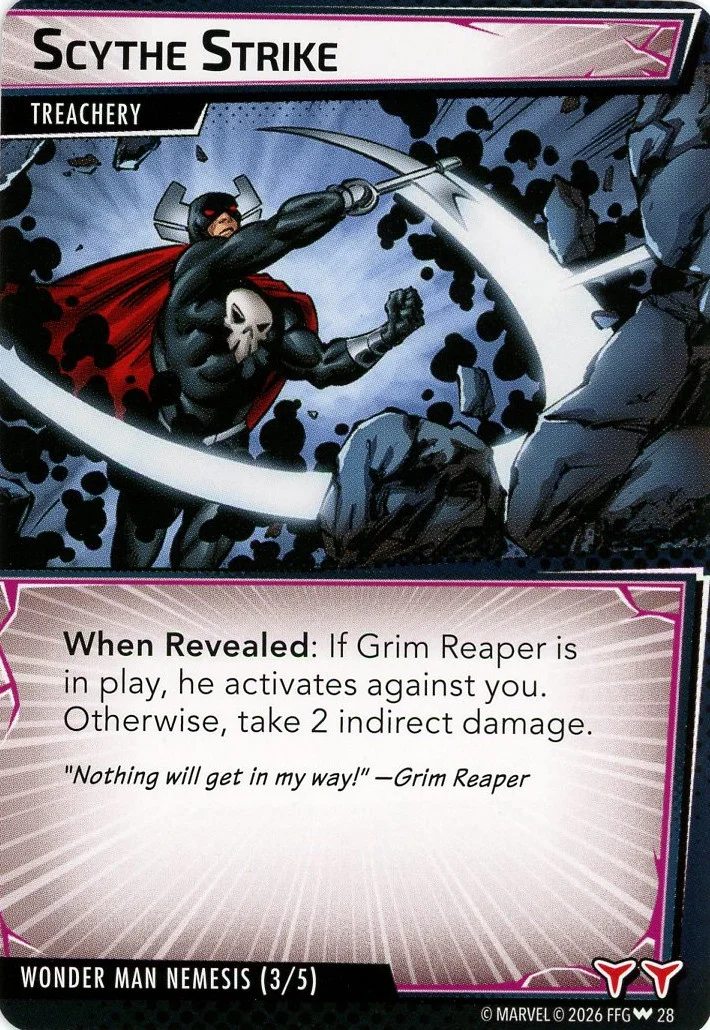
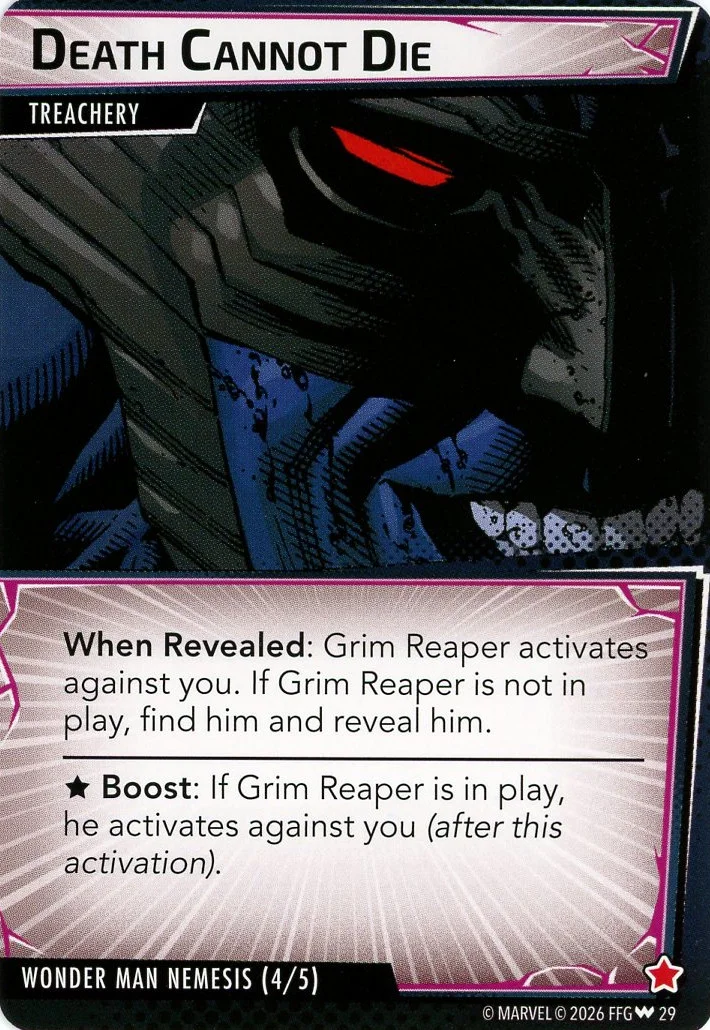
Death Cannot Die fits a man obsessed with death who, like his brother, refuses to stay dead. The family resemblance is uncanny.
My 2 cts
Wonder Man is another successful thematic adaptation, and a bold editorial choice. Bold, because FFG picked a 1964 B-lister best known for dying, and gave him a rule that breaks the aspect system: up to 55 events borrowed from the other aspects. Successful, because it fits. Simon borrowed a life from every Avengers era: Zemo’s lab, the Mansion, the Hollywood sign, the grave and back. After Hercules, Frank Brooks confirms his style: every card is a page of the comics, and the deckbuilder has to read it.
Simon died in his first issue and became a movie star. Your deck can be just as versatile.
Reading list
In order, from the shortest way in to the deep dive.
-
The origin, in one issue.
-
The comeback and the brother.
-
Hercules and the road to Hollywood.
-
Stunts, barbecues and the Blank.
-
Vision Quest.
-
The ionic Wonder Man and Wanda.
- Wonder Man reading guide (marvel.com) ↗ Deep dive
Covers the rest of his career.